

This guide is written for facilities teams, facility managers and cleaning contractors in elderly care in the Netherlands. You will read which rules apply, how to tackle the rooms, what to measure in the kitchen and which Danduct Clean equipment, supplied by Lamers Reinigingstechniek in Zelhem, suits which duct.

What makes ventilation in elderly care different from an office?
In an office, people are present during the day; in a nursing home, residents are there day and night. You notice a dirty system sooner there, and you cannot simply empty a ward for a day. On top of that, the building is divided into many small units: every room has its own bathroom with an extract valve, and corridors, living rooms and the kitchen each have their own ducts.
- Many small ducts: short extract ducts per room, often with one or two bends.
- Commercial kitchen: grease build up in cooker hoods and ducts, just as in hospitality.
- Vulnerable residents: dust and noise must be kept to a minimum during the work.
- Humidification: where it is present, a risk analysis and a legionella management plan are part of the job.
Which rules apply to air ducts in a Dutch nursing home?
There is no statutory cleaning frequency for ducts in long term care. There are, however, rules and guidelines that determine what you must be able to show.
| Rule or guideline | What it says | What you do with it |
|---|---|---|
| Working Conditions Decree (Arbobesluit) art. 6.2 | Sufficient uncontaminated air, installation always in working order | Care staff are entitled to clean air at their workplace |
| Working Conditions Decree (Arbobesluit) art. 4.87b | Measures against legionella in air humidification | Include humidifiers in the maintenance plan |
| Dutch central government on legionella | Employer carries out a risk analysis and records measures in a management plan | Record cleaning and checks in it too |
| SRI guidelines | Successor to the WIP guidelines; parties such as ActiZ contribute | Framework for infection prevention in elderly care |
| Building Works Living Environment Decree (Bbl), existing buildings art. 3.67 ff. | Ventilation provision that prevents damage to health | Basic requirement for the building itself |
According to its scope description, the new EN 15780:2025 does not apply to medical facilities. Whether a space in your organisation falls under that depends on its use. For residents' rooms, corridors and the kitchen the standard can be a useful benchmark; agree this with your building services consultant.
Rooms and bathrooms: nursing home duct cleaning room by room
Most of the work is in the extraction from bathrooms and toilets. Those ducts are short and narrow, so a large machine with a 30 metre shaft is often unnecessary there. A step by step plan per room:
- Agree a time slot with the ward, for example while the resident is in the living room.
- Cover the floor and the furniture around the valve.
- Remove the valve and clean it separately with soapy water, as Milieu Centraal (Dutch public information centre) also advises for homes.
- Close off adjacent valves with foam caps, so that dust does not travel to the room next door.
- Clean the duct with a compact brush cleaner or a compressed air nozzle, with extraction on the duct.
- Refit the valve at the correct setting and note the room in the logbook.
For these short ducts, PD4 duct cleaning tool is a logical choice: the PD4 is driven by a cordless or mains powered drill and has a shaft of 2.5 to 7.5 metres. If there are many bends, the the Intelligent Airnozzle for cleaning contractors cleans ducts from 30 mm and its camera shows whether you have covered every corner.
The commercial kitchen: measuring grease and proving care home ventilation cleaning
The kitchen of a care home behaves like a commercial kitchen. Grease adheres to the inside of extract ducts and can catch fire during a pan fire. The quality mark scheme drawn up by NVRL with TNO explicitly names care homes and hospitals alongside hospitality and offices.
| Element of the quality mark scheme | Value |
|---|---|
| Intervention value grease layer | 500 µm |
| Performance value after cleaning | maximum 200 µm |
| Measuring method | Wet film thickness gauge, accuracy 20 µm |
| Measuring points | Behind every cooker hood and per 10 metres of duct |
| Validity of the quality mark | 1 year |
Kitchen ducts usually require wet methods; according to Eurovent, dry methods are mainly sufficient for supply and general extract ducts. More on grease and fire risk can be found under kitchen extract cleaning.
Corridors, living rooms and central ducts
The central supply and extract ducts above corridors and living rooms are longer and have a larger diameter. An electric brushing machine is more efficient there. The Danduct Clean DC4 for cleaning contractors cleans round and rectangular ducts of 100 to 600 mm up to 30 metres deep, also vertically and through 90 degree bends. Fit access panels in logical places. Eurovent advises inspection openings no more than 10 metres apart or after no more than two bends of 45 degrees or more, and openings on both sides of dampers, filters and fans, among other components.
Which brush stiffness you choose depends on the duct material. Soft brushes are intended for fibreglass duct board and sheet steel. An overview is available under ventilation duct brush.
Limiting dust and noise for residents
Residents with lung complaints or dementia react to unrest and dust. A few practical agreements help:
- Work with continuous negative pressure on the duct. If you exhaust indoors, use HEPA filtration of 99.97% at 0.3 µm.
- Communicate with the ward beforehand and put a short explanation on the door.
- Schedule noisy parts during the day, outside rest periods.
- Tidy up immediately per room, so that no dust is left on textiles.
A short briefing for care staff also pays off: they know which residents need extra reassurance and which rooms are best left for later in the day. How to close off and extract sections is worked out in detail under duct sealing and extraction for cleaning contractors.
Which equipment do you choose for a care organisation?
| Situation | PD4 | DC4 | Intelligent Airnozzle |
|---|---|---|---|
| Short bathroom ducts per room | ✓ | ✗ often unnecessary | ✓ |
| Long central ducts up to 30 m | ✗ | ✓ | ✗ 20 m hose included |
| Ducts smaller than 100 mm | ✗ | ✗ | ✓ from 30 mm |
| Working without a compressor | ✓ | ✓ | ✗ |
| View of the inside while cleaning | ✗ | ✗ | ✓ |
The PD2 is also in the range; Lamers can give you the specifications. If you want to see everything side by side, go to compare duct cleaning kits for cleaning contractors. Acute care with operating theatres has extra requirements; these are covered under hospital ductwork cleaning.
Fictional example: a care home with sixty rooms
Fictional example. A care home with sixty rooms, two living rooms per floor and a commercial kitchen wants to get its ventilation in order. The facilities team spreads the work over four weeks: one floor per week, a fixed group of rooms per day. The kitchen is scheduled separately on a day when the hot meal is prepared elsewhere, with grease measurements before and after. The central ducts are done during a weekend. Afterwards there is a note per room in the logbook and a photo report of the kitchen.
For an estimate of the costs, see prices for ductwork cleaning. Other sectors are listed under sectors that need clean air ducts. Questions about the right machine? Through request a quotation for cleaning contractors you can also submit a callback request.
Air duct cleaning equipment from Lamers at a glance
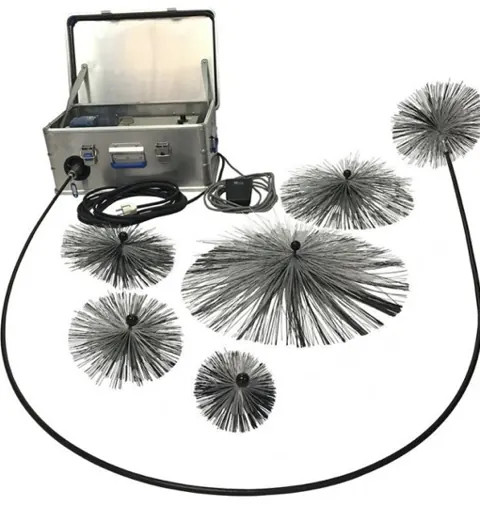 DC4 duct cleaning machineDC4: electric, up to 30 m, ducts from 100 to 600 mm
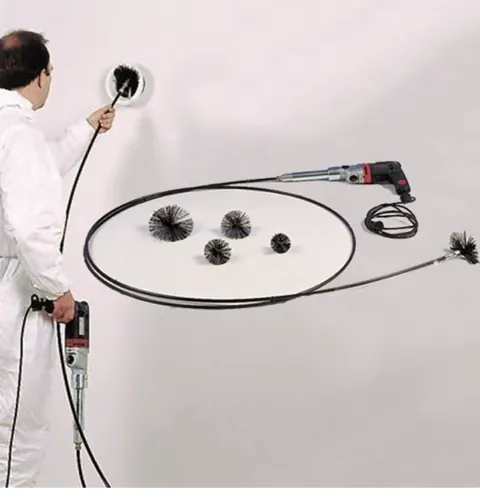 PD4 duct cleanerPD4: runs on a power drill, shaft 2.5 to 7.5 m
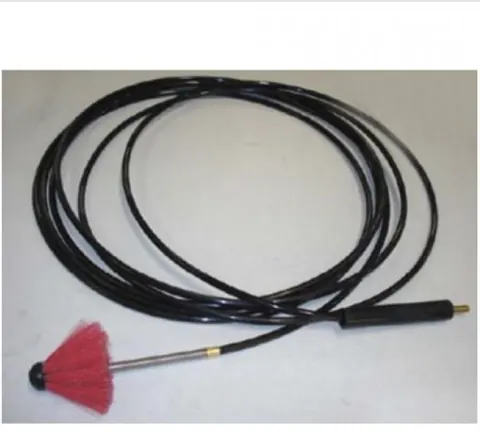 PD2 duct cleanerPD2: compact duct cleaner, specifications via Lamers
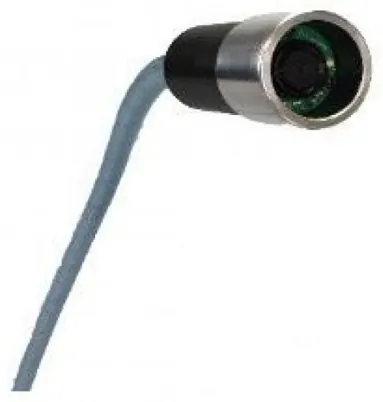 Intelligent AirnozzleCompressed air with camera, ducts from 30 mm
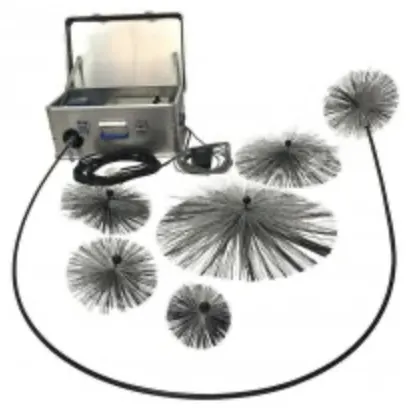 Duct cleaning brushesBrushes and shafts: soft, standard or Tynex
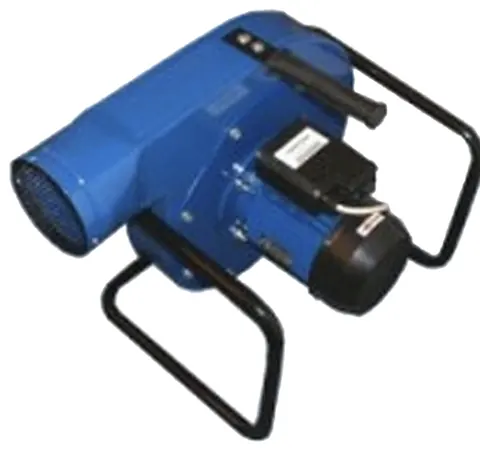 Duct sealing and extractionDuct balloons, diffuser caps and extraction
Frequently asked questions: care home air duct cleaning
How often should the air ducts in a Dutch care home be cleaned?
There is no statutory frequency for that. You decide on the basis of inspection and how the space is used. For the commercial kitchen, the NVRL quality mark scheme uses an intervention value of 500 µm of grease, and the quality mark is valid for one year. For residents' rooms you can use EN 15780 as a benchmark, in consultation with your building services consultant.
Can you clean the ducts of a nursing home room while the resident lives there?
Yes, if you keep the work short and clean. Schedule a time slot when the resident is elsewhere, cover the surroundings, close off neighbouring valves with foam caps and work with extraction on the duct. Per room, the work on a short extract duct is manageable. Tidy up immediately and note the room in the logbook.
Which duct cleaner suits the bathroom extraction in a nursing home?
For short, narrow extract ducts a compact cleaner is practical. The Danduct PD4 is driven by a power drill, has a shaft of 2.5 to 7.5 metres and brushes from 100 to 600 mm that are available separately. If the ducts are smaller or have more bends, a compressed air nozzle with a camera is an alternative.
Does a nursing home fall under EN 15780:2025?
The scope description states that EN 15780:2025 applies to ventilation systems except industrial, medical and laboratory facilities. Whether a space in a nursing home counts as medical depends on its use. For residents' rooms, corridors and kitchens the standard can be a benchmark. Record the choice per space and consult your adviser.
What must a Dutch care organisation do against legionella in air handling?
Article 4.87b of the Working Conditions Decree (Arbobesluit) covers measures against legionella in air humidification installations. As an employer you carry out a risk analysis and record the measures in a management plan. The RIVM guideline names humidifiers as a possible source, although most infections come from water installations that produce spray. So include humidifiers in maintenance.
How do you measure grease in the kitchen extraction of a care home?
With a wet film thickness gauge, as the NVRL quality mark scheme prescribes. You take a sample behind every cooker hood and per 10 metres of duct, with an accuracy of 20 µm. Above 500 µm you must intervene, and after cleaning the grease layer may be at most 200 µm. Record the measurements for your file and insurer.
How do you limit dust nuisance during duct cleaning in elderly care?
Keep the duct under continuous negative pressure with an extraction unit and use HEPA filtration if it exhausts indoors. Close off adjacent valves, cover the room and tidy up immediately per room. Communicate with the ward beforehand, so that care staff can prepare residents for the work and the noise.
Why do filters in a nursing home get dirty faster than you might expect?
Residents are indoors all day, washing and cooking take place and many people come and go. Milieu Centraal (Dutch public information centre) warns that contaminated filters can blow moulds and bacteria along. Dirty filters also create more resistance, so the fan has to work harder. Check filters more often than the minimum and clean grilles and valves as well.
Who is responsible for clean ducts in a care organisation?
The organisation, as employer and building manager. The Working Conditions Decree requires sufficient uncontaminated air and an installation in working order, and the Bbl requires a ventilation provision that prevents damage to health. In practice the facilities team manages the maintenance plan and either hires a cleaning contractor or works with its own equipment.
Can the facilities team of a care home clean the ducts in house?
For smaller ducts and valves that is possible with the right equipment, brushes and sealing materials. For the commercial kitchen and large central ducts, many organisations choose a specialised company with measuring equipment. Lamers supplies the machines and advises which kit suits the ducts in your building.
Sources and reference date
All facts on this page were checked on 6 October 2026.
- Working Conditions Decree art. 4.87b legionella (in Dutch)
- Dutch central government: employers and legionella (in Dutch)
- NVRL/TNO quality mark scheme for cleanliness (in Dutch)
- Binnenklimaattechniek on the quality mark scheme (in Dutch)
- SRI collaboration on infection prevention (in Dutch)
- Eurovent REC 6/7 cleanliness of ductwork
- Danduct PD4 and PD5
- Milieu Centraal: balanced ventilation (in Dutch)
Editorial team: Lamers Reinigingstechniek B.V., supplier of professional air duct cleaning equipment in Zelhem, the Netherlands. Updated on . See also Lamers Equipment for cleaning contractors.
Request a quote or advice from Lamers

René Hendriksen, Sales Account Manager at Lamers, advises you on the machine, brushes and extraction for your jobs.
Briefly tell us what you clean (duct type, diameter, length, contamination and sector). Lamers will contact you with advice and a tailored quote.
Prefer direct contact? Call +31 (0)314 623 341, message us on WhatsApp 06-38048347 or email info@lamersequipment.nl.
Prefer a quick call first? Lamers will call you back

Leave your number. René Hendriksen or a colleague from Lamers will call you back to discuss duct type, diameter and the right equipment.
Or send us a message right away: WhatsApp 06-38048347