

This buyer's guide is written for cleaning contractors, installers and facilities teams who clean ductwork for clients, often once a year and linked to an inspection. That rhythm is common practice, not law: in the Netherlands there is no statutory cleaning frequency for air ducts, but there is a duty to keep installations in good working order and the air free of contamination.
Lamers Reinigingstechniek in Zelhem supplies the machines, brushes and accessories made by Danduct Clean. Prices are not listed on this page: you receive a price on quotation, matched to the kit that fits your work.

Which ducts do you clean? Start with shape and diameter
The most common mistake when buying is starting with the machine instead of the duct. First make a short list of the duct types you saw at clients over the past year. Round spiral ducts in offices, rectangular ducts above a suspended ceiling, small extract ducts in hotel bathrooms or wide main ducts in a production hall each ask for something slightly different.
- Diameter: the DC4 works in ducts from 100 to 600 mm across, round and square. For comparison, LIFA AIR spreads that range over several machines, from 100 to 400 mm up to 400 to 1,200 mm.
- Shape: a rotating brush has to fill the duct properly. In rectangular ducts you choose the brush size on the longest side and check the corners with a camera.
- Bends: the DC4 handles vertical ducts and 90 degree bends. For small ducts with many bends there are softer, flexible shafts.
- Access: according to Eurovent, inspection openings should be no more than 10 metres apart, or no more than two bends of 45 degrees or more apart. That sets the minimum length of your shaft.
If you mainly work in housing and small commercial buildings with narrow ducts, a compact kit is the obvious choice. If you work in offices, schools and care buildings with long main ducts, you need reach and a sturdy drive.
Shaft length, speed and drive: electric or on a power drill
The drive is the biggest difference between kits. Danduct Clean offers two main routes.
Electric machine: DC4
With the electric DC4 brushing machine you feed the shaft into the duct and the unit does the rest. A light, solid steel shaft keeps the brush in the centre of the duct, the reach is up to 30 metres, the speed is adjustable and an automatic left and right system reverses the direction of rotation in time. The machine runs on 230 volts as standard.
Power drill as the drive: PD4
For duct cleaning with a power drill you use a cordless or mains drill as the motor. The PD4 has a shaft of 2.5 to 7.5 metres and brushes from 100 to 600 mm that you buy separately. Danduct describes it as very easy to handle and suitable for small ducts.
On rotation speed: the DC4 has adjustable speed, and LIFA AIR quotes a range of 225 to 580 revolutions per minute for its SpecialCleaner 20. Adjustable speed is useful, because a soft brush in a fragile duct needs a different speed than a stiff brush against caked dust. Ask for the speed range of every machine before you choose.
Lamers also carries the PD2 from Lamers. Request its specifications from Lamers, so you can compare it fairly with the PD4.
Brushes for your duct cleaning kit: soft, normal or Tynex
A machine is only as good as the brush on it. Danduct supplies shaft brushes in three grades of stiffness, from 100 to 600 mm:
| Brush | When to use it | Note |
|---|---|---|
| Soft | Fragile ducts, fibreglass duct board, light dust | The EPA recommends soft brushes for fibreglass duct board and sheet metal |
| Normal | Standard supply and extract ducts in offices, schools and care buildings | For the DC4, polypropylene bristles of 0.6 or 0.9 mm |
| Tynex (aggressive) | Stubborn, caked on dust | Do not use in fragile ducts |
A practical rule: buy at least one normal brush for every diameter you meet often, and keep soft and aggressive brushes in stock for the exceptions. The DC4 Large package, for example, contains a regular and an aggressive brush set of 7 pieces each. More on stiffness and size is explained under duct cleaning brushes.
Grease ducts from commercial kitchens are a separate story. According to Eurovent, dry methods are usually sufficient for supply and general extract ducts, but wet methods are needed for commercial kitchen extract. A spray system is available for the DC4 for that purpose.
Sealing and extraction: no complete kit without negative pressure
A brush loosens dust. Where that dust ends up decides whether your client is happy. A complete kit therefore also includes sealing and extraction:
- Duct balloons to close off a section of duct during cleaning or inspection.
- Foam caps to seal valves and diffusers, so dust does not end up in the room.
- Inspection hatches, resealable, and small access doors for places without an opening.
- An extraction unit with filtration that keeps the section being cleaned under constant negative pressure.
If the extraction unit exhausts inside the building, a HEPA filter capturing 99.97% at 0.3 µm is the requirement in the University of Maryland guideline. If you exhaust the air outdoors, you have more freedom. Look at the options for negative pressure with HEPA extraction in the same quotation as the machine, so that connections and hoses fit each other.
Camera and compressed air: when do you add the Airnozzle to your ventilation cleaning kit?
Clients want to see what they pay for. A camera shows the contamination before and after cleaning and helps you in ducts where a brush does not fit well. The Intelligent Airnozzle from Danduct Clean cleans with compressed air and has a built in camera with LED lighting. It works in ducts from 30 mm, takes tight 90 degree bends and pulls itself forward on air pressure.
What you need for it: a compressor delivering 700 litres per minute or more at about 10 bar (or nitrogen), and a monitor that you buy separately. The black and white image runs through a standard A/V output. A 20 metre hose and a carrying case are included.
Lamers itself says that cleaning with an air nozzle was always considered less effective than rotating brushes, but that with the camera you see and clean every spot and corner. So treat the air nozzle with built-in camera as an addition to your brushing machine and not as a replacement. Note: in bakeries, Alimento and TNO advise against compressed air for cleaning flour dust. There you work with a brush and extraction.
Which duct cleaning kit suits your type of business?
No single kit is right for everyone. This table gives a starting point per type of business. It is a buying aid, not tailored product advice: you agree the final configuration with Lamers.
| Type of business | Typical ducts | Drive | Brushes | Sealing and extraction | Camera |
|---|---|---|---|---|---|
| Cleaning contractor with annual contracts in offices, schools and care | Round and square, 100 to 600 mm, long runs | DC4 with 10, 20 and 30 m shafts | Normal plus soft and Tynex | ✓ balloons, caps, HEPA unit | ✓ for reporting |
| Installer who cleans ducts alongside maintenance | Smaller ducts in homes and small buildings | PD4 on a power drill, shaft 2.5 to 7.5 m | Normal and soft in common sizes | ✓ caps and extraction | Optional |
| Facilities team of a building or factory | Own installation, known sizes | DC4 or PD4, depending on length | Only the sizes in your own building | ✓ negative pressure during operation | ✓ for periodic checks |
| Specialist in small or awkward ducts | From 30 mm, many bends | Intelligent Airnozzle next to a brushing machine | Soft shafts for bends | ✓ extraction at the end | ✓ built in |
Fictional example: a cleaning contractor does the same series of office buildings every year, linked to the annual inspection. It buys a DC4 in the Large package with a 30 metre shaft, trolley and two brush sets, and adds duct balloons and a HEPA extraction unit. An installer who mainly does small extract ducts in homes starts with a PD4 and a few brushes in the sizes he sees most. More on running duct cleaning as a regular service is covered under equipment for cleaning contractors.
DC4 packages: Medium or Large?
The manufacturer offers the DC4 in two packages. That keeps the choice simple:
| Component | Medium | Large |
|---|---|---|
| DC4 machine | ✓ | ✓ |
| 10 and 20 m shaft | ✓ | ✓ |
| 30 m shaft | ✗ | ✓ |
| Brush set of 7, 100 to 600 mm | ✓ | ✓ |
| Aggressive brush set of 7 | ✗ | ✓ |
| Trolley and shaft holder | ✗ | ✓ |
| Price | Price on quotation | Price on quotation |
Medium fits if your runs are rarely longer than 20 metres. Large makes sense if you work in big buildings and move the machine often. If you would like to see all options side by side first, go to the overview of compare duct cleaning kits.
Checklist before you order a kit for cleaning air ducts
- Which diameters and shapes do you meet most often? Write down the three most common sizes.
- What is your longest run between two openings? That sets the shaft length.
- Do you often work in vertical ducts or with many bends?
- Electric machine or power drill: how many hours a week will you run it?
- Which brush grades do you need, and for which duct materials?
- How do you seal off and how do you keep the duct under negative pressure? If you exhaust indoors, use HEPA.
- Do you want a camera for reporting to your client?
- Do you clean kitchen extraction? Then you need a wet system.
Go through the list with your own order book in front of you. If most answers point to short, narrow ducts, a drill driven kit with a few brushes covers the bulk of your work. If several answers point to long runs, vertical sections and reporting, a complete electric kit with extraction and a camera will save you return visits. Mixed answers are normal for contractors with varied clients; in that case it can make sense to start with the machine that covers most jobs and add accessories later.
Still unsure whether to buy or try first? Read the honest overview on hiring versus buying duct cleaners. Once you have filled in the checklist, you can get in touch with Lamers through the site and send your answers along, so Lamers can propose a suitable kit.
Air duct cleaning equipment from Lamers at a glance
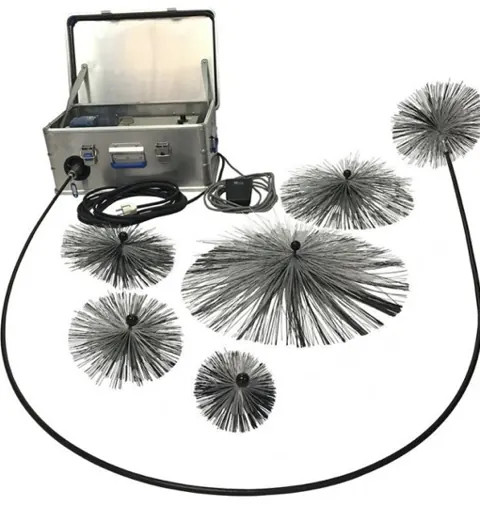 DC4 duct cleaning machineDC4: electric, up to 30 m, ducts from 100 to 600 mm
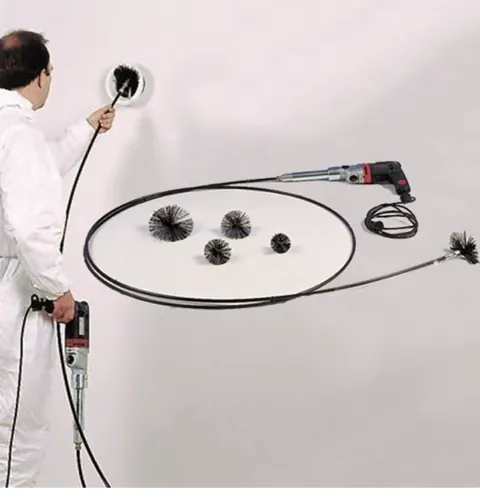 PD4 duct cleanerPD4: runs on a power drill, shaft 2.5 to 7.5 m
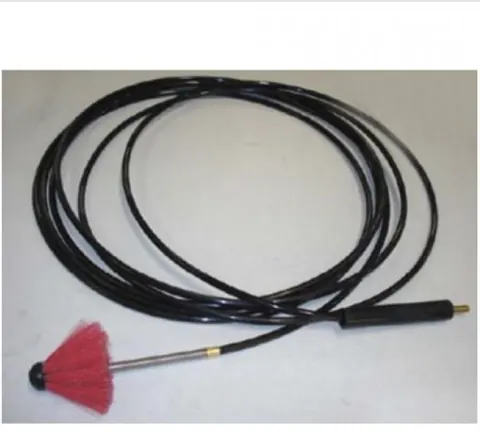 PD2 duct cleanerPD2: compact duct cleaner, specifications via Lamers
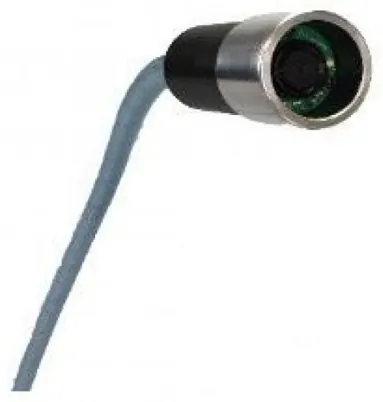 Intelligent AirnozzleCompressed air with camera, ducts from 30 mm
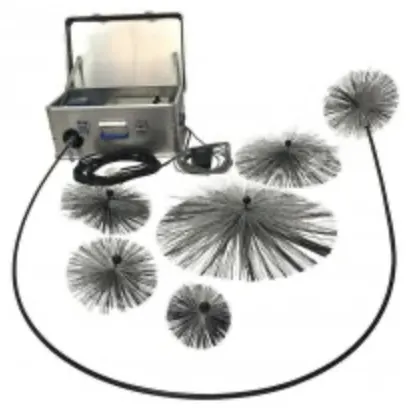 Duct cleaning brushesBrushes and shafts: soft, standard or Tynex
 Duct sealing and extractionDuct balloons, diffuser caps and extraction
Frequently asked questions: duct cleaning kit
What should a duct cleaning kit for a cleaning contractor contain as a minimum?
As a minimum: a drive (an electric machine or a power drill set), a shaft long enough for your runs, brushes in the sizes you meet often, sealing for valves and duct sections, and an extraction unit with filtration. A camera is not a must, but it is very useful for reporting to your client and for showing the result.
Which duct diameters can I clean with the DC4 from a duct cleaning kit?
The DC4 from Danduct Clean works in ducts from 100 to 600 mm across, both round and square. The machine cleans up to 30 metres deep and can pass through vertical ducts and 90 degree bends. For ducts smaller than 100 mm you look at other solutions, such as the Intelligent Airnozzle from 30 mm.
Is a drill driven duct cleaning kit enough for an installation company?
That depends on your work. The PD4 uses a cordless or mains power drill, has a shaft of 2.5 to 7.5 metres and brushes from 100 to 600 mm. Danduct describes it as suitable for small ducts. If you mostly do short runs, this is enough. For long main ducts a DC4 is a better fit.
How long should the shaft of my duct cleaning kit be?
Look at the distance between two openings in the ducts you clean. Eurovent recommends inspection openings no more than 10 metres apart or no more than two bends of 45 degrees or more apart. In practice there are also older installations with fewer openings, which is why many firms choose extra shaft length.
Which brush stiffness should I choose for a kit used in offices and schools?
For ordinary supply and extract ducts in offices and schools, a normal brush is the starting point. Keep soft brushes at hand for fragile ducts or fibreglass duct board, as the EPA recommends, and Tynex brushes for caked dust in sturdy steel ducts. That way one kit covers most buildings.
Do I really need HEPA extraction with a duct cleaning kit?
If your extraction unit exhausts the filtered air inside the building, HEPA with 99.97% capture at 0.3 µm is the requirement in the University of Maryland guideline. If you exhaust the air outdoors, HEPA is less essential. Negative pressure during cleaning remains necessary in both cases, so the loosened dust stays in the duct.
Can I use a compressed air cleaning kit in bakeries?
For flour dust in bakeries, compressed air is actually advised against. Alimento says compressed air, hand brushes and brooms are out of the question, and TNO recommends a vacuum cleaner instead of compressed air. In bakeries you therefore work with a brush and extraction. In EX zones, TNO says an ATEX 114 certified vacuum cleaner is needed.
What does a Danduct Clean duct cleaning kit from Lamers cost?
Lamers does not list fixed prices on this site. The price depends on the machine, the package, the number of brushes and the accessories you choose. Fill in the checklist and request a quote. You then receive a price on quotation for exactly the kit that suits your assignments and the ducts you clean.
Can I use the same duct cleaning kit for grease ducts in restaurant kitchens?
Partly. According to Eurovent, dry methods are usually enough for supply and general extract, but wet methods are needed for commercial kitchen extract. A spray system exists for the DC4. If you often clean catering extraction, include that in your request, so the kit is configured for it from the start.
How often does a cleaning contractor use a duct cleaning kit per client?
Many cleaning contractors clean for business clients once a year, often linked to an inspection. That is practice, not law: there is no statutory cleaning frequency. In the hospitality sector, however, insurers do ask for an annual inspection of the extract duct and cleaning by a specialist where needed.
Sources and reference date
All facts on this page were checked on 6 October 2026.
Editorial team: Lamers Reinigingstechniek B.V., supplier of professional air duct cleaning equipment in Zelhem, the Netherlands. Updated on . See also Lamers cleaning equipment.
Request a quote or advice from Lamers

René Hendriksen, Sales Account Manager at Lamers, advises you on the machine, brushes and extraction for your jobs.
Briefly tell us what you clean (duct type, diameter, length, contamination and sector). Lamers will contact you with advice and a tailored quote.
Prefer direct contact? Call +31 (0)314 623 341, message us on WhatsApp 06-38048347 or email info@lamersequipment.nl.
Prefer a quick call first? Lamers will call you back

Leave your number. René Hendriksen or a colleague from Lamers will call you back to discuss duct type, diameter and the right equipment.
Or send us a message right away: WhatsApp 06-38048347