

That makes planning harder than it seems. A facility manager wants a date in the schedule, but the standards work with cleanliness classes and inspections. Below you will find what sources advise per building type, checked on 6 October 2026, and how to turn that into a schedule of your own.

Duct cleaning frequency per building type in one table
The table combines advice from government, manufacturers, insurers and standards. Where a figure comes from a secondary source, this is stated.
| Building or system | Advice or interval | Source |
|---|---|---|
| Home with mechanical extract | have ducts cleaned at least 1x per 8 years, fan unit 1x per 2 years, check the system roughly every 4 years, clean grilles yourself at least 1x a year | Milieu Centraal |
| Home with balanced ventilation (MVHR) | filters 2x a year, valves every 2 years by a technician, ducts roughly once every 8 years | Milieu Centraal; Itho Daalderop mentions 8 years, Zehnder 8 to 10 years |
| Office, school, hotel | no statutory frequency; installation always ready for use; risk assessment every 2 years according to a trade article | Working Conditions Decree (Arbobesluit) art. 6.2; MODBS trade article |
| Hospital and care with air handling | hygiene inspection every 2 years with humidification, every 3 years without; annual risk assessment in high risk buildings according to a trade article | VDI 6022 (TÜV Süd); MODBS trade article |
| Commercial kitchen and hospitality | at least 1x a year professionally, chip shop or fryer restaurant 2x a year; grease filters weekly | Rabobank, KHN, Goudse |
| Local exhaust ventilation in industry | thoroughly examine and test at least every 14 months (British rule, for comparison) | HSE (UK) |
For bakeries and the food industry the sources give no fixed interval. There, the contamination found at inspection decides the moment.
Why standards give no fixed interval for duct cleaning
The European standard EN 15780:2025, which replaces the 2011 version, does not work with a calendar but with cleanliness. You place the system in a cleanliness class, inspect at fixed intervals and clean as soon as an acceptable level has been exceeded. Informative Annex A contains tables with cleanliness classes, inspection intervals per class in months and acceptable levels.
According to trade publications, the dust limits per quality class are 0.6 g/m² (high), 3.0 g/m² (medium) and 4.5 g/m² (low). Those figures come from secondary sources; we have not seen the standard itself. The practical message: a clean system in a quiet office can last longer than a system next to a busy road or a building site.
Exactly which standards apply and how they relate to each other is explained under Rules for clean ductwork.
Ventilation duct cleaning: how often in homes and residential buildings?
For homes the advice is the most concrete. For mechanical ventilation cleaning, Milieu Centraal advises outsourcing the extract ducts at least once every 8 years, having the fan unit serviced once every 2 years and cleaning grilles yourself at least once a year.
For ducts of balanced ventilation filter maintenance is added: replace twice a year, more often if you live next to a busy road. The manual of an Itho Daalderop heat recovery unit calls duct cleaning a task for the installer, every 8 years.
For housing associations and owners' associations (VvE) with many homes this is relevant: an 8 year cycle means you can schedule roughly one eighth of the portfolio each year.
Inspection intervals in care, offices and schools
In non-residential buildings, the responsibility lies with the employer or building owner. Article 6.2 of the Working Conditions Decree (Arbobesluit) requires sufficient uncontaminated air and installations that are always ready for use. How often you clean follows from your own inspections.
- Care: the German VDI 6022 mentions a hygiene inspection every 2 years for installations with humidification and every 3 years without. For operating theatres, an air management plan with periodic checks is part of the guideline. More under air duct cleaning in hospitals.
- Schools: Frisse Scholen (the Dutch fresh schools programme) calls for periodic technical and hygienic maintenance. RVO (Netherlands Enterprise Agency) reports that ducts in newly completed schools are sometimes full of construction dust, so plan an inspection at handover. See also fresh air in classrooms.
- Humidification: for humidification installations, legionella measures apply under article 4.87b of the Working Conditions Decree, with a risk analysis and a management plan.
Interval for kitchen extraction based on operating hours
In commercial kitchens the frequency depends heavily on how much cooking is done. A British supplier of kitchen extract cleaning uses this breakdown:
| Use per day | Clean every |
|---|---|
| Heavy, 12 to 16 hours | 3 months |
| Moderate, 6 to 12 hours | 6 months |
| Light, 2 to 6 hours | 12 months |
Dutch sources are in line with this: KHN mentions at least once a year in practice and more often with grilling, deep frying or wok cooking. The NVRL certification scheme, drawn up with TNO, uses an intervention value of 500 µm of grease and a performance value after cleaning of no more than 200 µm; the certificate is valid for 1 year. How to tackle this in practice is covered under cleaning a cooker hood duct.
Signs that you need to clean sooner than planned
A schedule is a starting point. These signs are a reason not to wait:
- visible mould, vermin or excessive dust in or near the ducts (EPA);
- less airflow at the valves: in a lab test, heavily contaminated filters gave 37% less supply air;
- CO2 meters in classrooms that more often exceed the target level;
- a renovation or new build in which construction dust can get into the system;
- in kitchens: grease at grilles or filters, because according to KHN serious contamination is often not visible to the naked eye.
To look inside ducts with tight bends you need a camera. Air nozzle duct cleaning combines compressed air with a built in camera with LED lighting, so you inspect and clean in one pass.
How to build your own ductwork cleaning schedule for your buildings
With these six steps you turn loose pieces of advice into a schedule you can justify:
- Make an inventory of the systems per building: extract, balanced, air handling unit, kitchen extraction, humidification.
- Inspect a representative part with a camera and record the contamination.
- Choose a class per system, for example high for care and medium for offices.
- Set an interval and link it to inspection moments, not only to cleaning.
- Record every cleaning with photos and measurements.
- Evaluate every year: if the system was still clean at inspection, the interval can be longer.
Anyone managing many buildings will notice that the frequency feeds straight into the budget. For that, look at the air duct cleaning cost and at which ventilation duct cleaning tools fit your ducts. For ducts of 100 to 600 mm and lengths of up to 30 m, DC4 duct cleaning machine for cleaning contractors is a logical first choice.
A practical tip for the schedule itself: put inspection and cleaning in separate columns. An inspection that finds a clean system is not wasted time but evidence that your interval works, and it gives you the basis to stretch the next interval with confidence.
Air duct cleaning equipment from Lamers at a glance
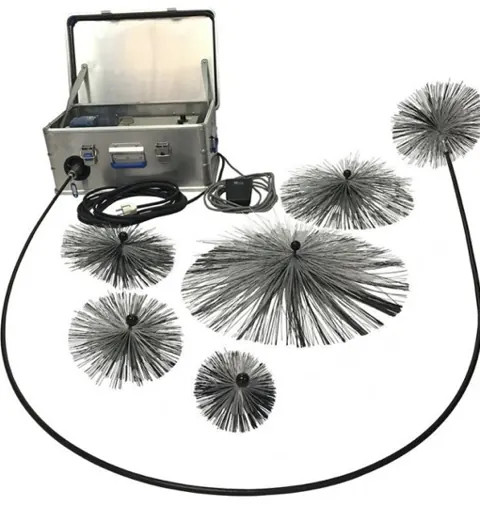 DC4 duct cleaning machineDC4: electric, up to 30 m, ducts from 100 to 600 mm
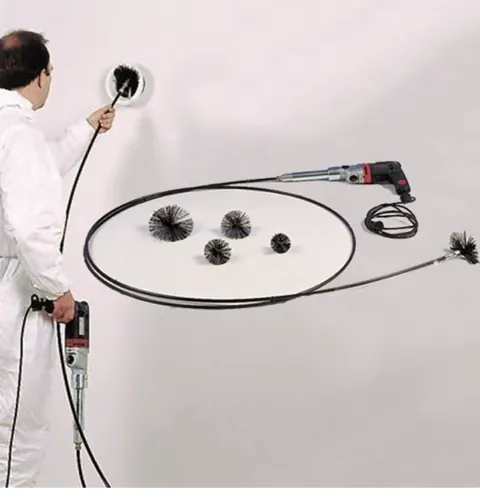 PD4 duct cleanerPD4: runs on a power drill, shaft 2.5 to 7.5 m
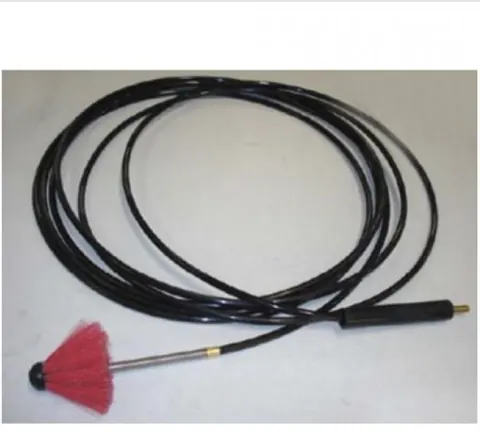 PD2 duct cleanerPD2: compact duct cleaner, specifications via Lamers
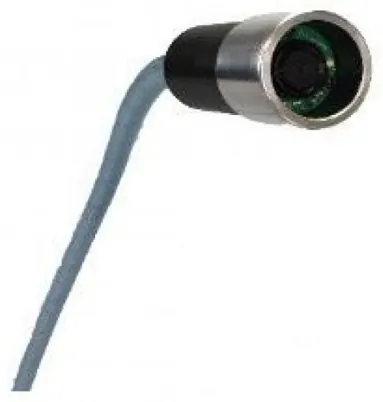 Intelligent AirnozzleCompressed air with camera, ducts from 30 mm
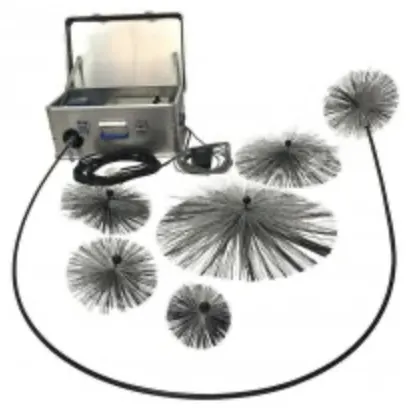 Duct cleaning brushesBrushes and shafts: soft, standard or Tynex
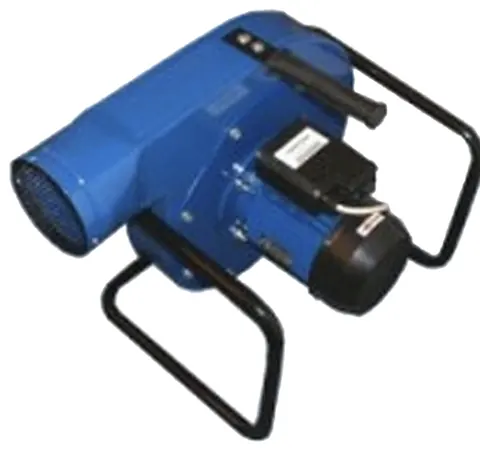 Duct sealing and extractionDuct balloons, diffuser caps and extraction
Frequently asked questions: how often should air ducts be cleaned
How often should air ducts be cleaned in a home with mechanical extract?
Milieu Centraal advises having the extract ducts cleaned by a specialist at least once every 8 years. The fan unit gets maintenance once every 2 years and you check the whole system roughly every 4 years. You clean grilles and valves yourself at least once a year with soapy water.
How often should the ducts of an MVHR installation be cleaned?
For balanced ventilation, Milieu Centraal mentions roughly once every 8 years for the ducts. Itho Daalderop mentions 8 years in a manual as a task for the installer, Zehnder advises 8 to 10 years. You replace filters twice a year and have a technician clean the valves every 2 years.
Is there a statutory cleaning frequency for air ducts in Dutch offices?
No. Article 6.2 of the Working Conditions Decree (Arbobesluit) requires sufficient uncontaminated air and an installation that is always ready for use, but it does not specify an interval. You set the frequency yourself based on inspection. A trade article mentions a risk assessment every 2 years as a practical guideline for buildings such as offices.
How often do insurers require a hospitality extract duct to be cleaned?
According to KHN there is no statutory frequency, but fire insurers require regular maintenance. Rabobank advises professional cleaning at least once a year and twice a year for a fryer restaurant. Goudse asks for the extract duct and the motor to be inspected every year and cleaned by a specialist if necessary.
How often does a VDI 6022 hygiene inspection take place in a hospital?
VDI 6022 mentions a hygiene inspection every 2 years for air handling installations with humidification and every 3 years without humidification. An initial inspection should take place before commissioning, after a major change or if an installation has never been inspected. It is a German guideline that often serves as a reference in the Netherlands.
Does EN 15780:2025 prescribe a fixed period for cleaning air ducts?
No, the standard works with cleanliness classes. Informative Annex A contains inspection intervals per class in months and acceptable cleanliness levels. You clean when an inspection shows that the level has been exceeded. The 2025 version replaces the one from 2011 and now also covers kitchen extraction.
How often should grease filters in a commercial kitchen be cleaned or replaced?
The prevention conditions of insurer Goudse ask for grease filters to be cleaned or replaced every week. That is separate from the duct itself, which is inspected every year. Clean filters keep grease out of the duct and so extend the time until the next duct cleaning, but they do not replace that cleaning.
Should a new school building be checked for duct contamination at handover?
That is sensible. In the Frisse Scholen process manual, RVO reports that air ducts in newly completed schools can be contaminated with construction dust. A handover inspection prevents that dust from being blown straight into the classrooms. Record the result, so you have a baseline for later inspections.
How often should local exhaust ventilation in a factory be examined?
In the Netherlands the sources give no fixed period. The British HSE requires local exhaust ventilation to be thoroughly examined and tested at least every 14 months, with a record that is kept for 5 years. You can use such a period as a guide in your own maintenance plan for extraction ducts.
How long does an NVRL certificate for kitchen extraction remain valid?
The NVRL certificate for the cleanliness of air handling and ventilation systems is valid for 1 year if the hygienic limit values are met. The scheme uses an intervention value of 500 µm of grease and a maximum of 200 µm after cleaning. In practice this leads to an annual cycle of measuring and cleaning where necessary.
Sources and reference date
All facts on this page were checked on 6 October 2026.
- Milieu Centraal: ventilation with mechanical extract (in Dutch)
- Milieu Centraal: balanced ventilation (in Dutch)
- Rabobank: fire safety in hospitality (in Dutch)
- KHN: am I required to clean the extract duct? (in Dutch)
- TÜV Süd: VDI 6022 hygiene inspections (in German)
- Standard Norge: NS-EN 15780:2025
- Brodex Trident: requirements for cleaning kitchen extraction
- RVO: Frisse Scholen process manual (in Dutch)
Editorial team: Lamers Reinigingstechniek B.V., supplier of professional air duct cleaning equipment in Zelhem, the Netherlands. Updated on . See also Lamers from Zelhem for cleaning contractors.
Request a quote or advice from Lamers

René Hendriksen, Sales Account Manager at Lamers, advises you on the machine, brushes and extraction for your jobs.
Briefly tell us what you clean (duct type, diameter, length, contamination and sector). Lamers will contact you with advice and a tailored quote.
Prefer direct contact? Call +31 (0)314 623 341, message us on WhatsApp 06-38048347 or email info@lamersequipment.nl.
Prefer a quick call first? Lamers will call you back

Leave your number. René Hendriksen or a colleague from Lamers will call you back to discuss duct type, diameter and the right equipment.
Or send us a message right away: WhatsApp 06-38048347