

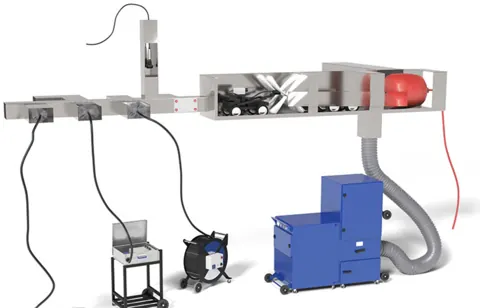
This page is for specialist cleaning contractors, installers and technical service providers who buy equipment to work at other companies. You will read how the annual cycle of inspection and cleaning works, which machine suits each type of client, how to expand your range of services and how to give the client a report that convinces.
Lamers Reinigingstechniek from Zelhem in the Netherlands supplies, among other things, the machines made by Danduct Clean. On the product pages you can request a quote, request a callback or ask a question.

Air duct cleaning equipment from Lamers at a glance
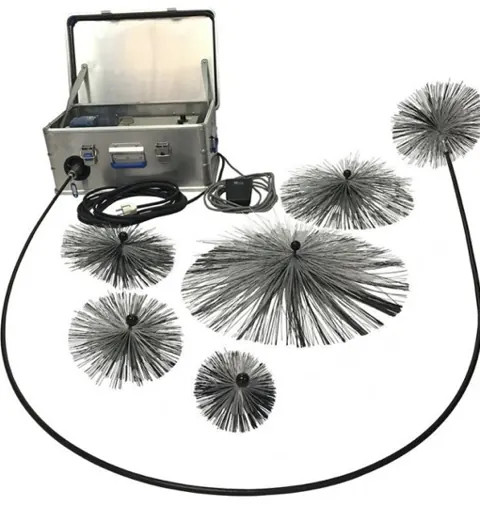 DC4 duct cleaning machineDC4: electric, up to 30 m, ducts from 100 to 600 mm
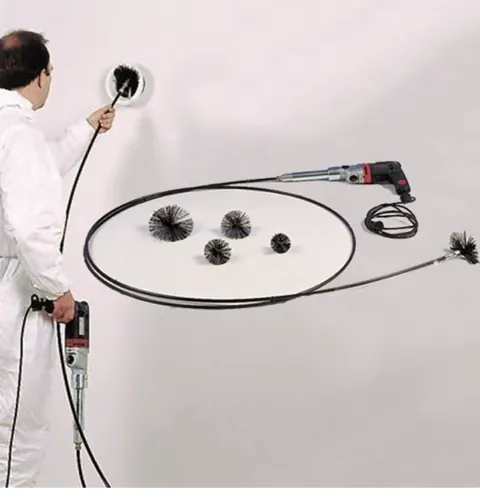 PD4 duct cleanerPD4: runs on a power drill, shaft 2.5 to 7.5 m
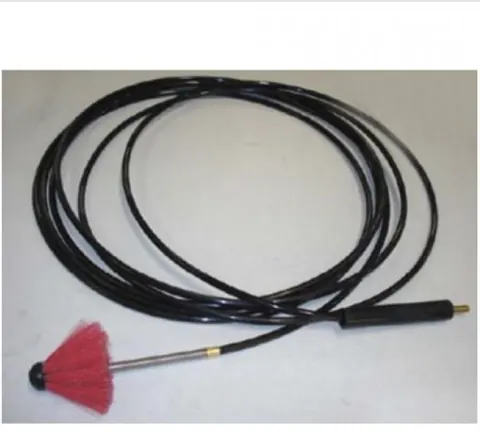 PD2 duct cleanerPD2: compact duct cleaner, specifications via Lamers
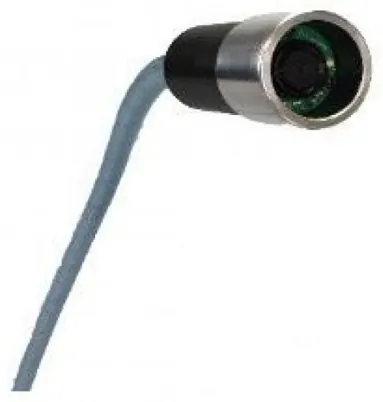 Intelligent AirnozzleCompressed air with camera, ducts from 30 mm
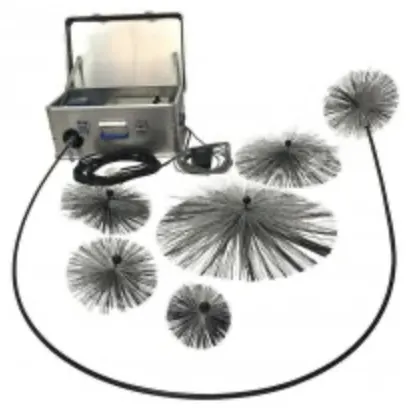 Duct cleaning brushesBrushes and shafts: soft, standard or Tynex
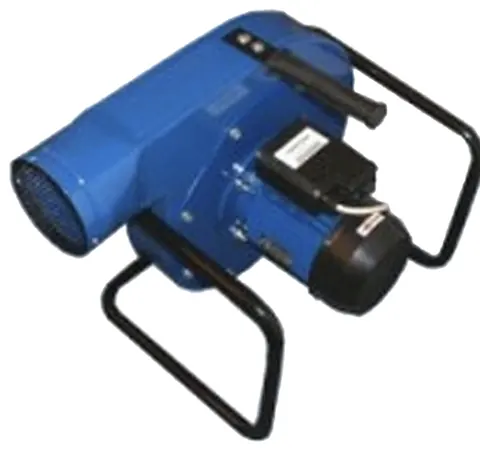 Duct sealing and extractionDuct balloons, diffuser caps and extraction
The annual cycle: inspection and cleaning in one round
In practice, specialist cleaning contractors often clean their clients' ducts every year, linked to the annual inspection. That is a working arrangement between you and your client, not a legal duty. KHN (Royal Dutch Hospitality Association) writes that the cleaning frequency for kitchen extraction in hospitality is not laid down by law, but that fire insurers do require regular maintenance. Such requirements are set out in policy conditions: the insurer Goudse asks hospitality businesses to have the extract duct and motor inspected every year and, where necessary, cleaned by a specialist. Rabobank advises professional cleaning at least once a year, and twice a year for a restaurant that deep fries.
Outside hospitality an annual rhythm also works well. The NVRL quality mark for cleanliness is valid for 1 year if the hygienic limit values are met. EN 15780:2025 links inspection intervals to cleanliness classes, and VDI 6022 mentions a hygiene inspection every 2 years for installations with humidification and every 3 years without. Which interval suits which building is explained under duct cleaning frequency for cleaning contractors.
| Step in the annual round | What you do | Equipment | What the client gets |
|---|---|---|---|
| 1. Planning | Appointment per site, arrange access and downtime | Duct drawing, list of access hatches | A fixed date every year |
| 2. Inspection | Camera footage of supply and extract, measuring where needed | Inspection camera or Intelligent Airnozzle | Footage of the starting situation |
| 3. Sealing and negative pressure | Close valves, seal off the duct section, extract | Foam caps, balloons, extraction unit with HEPA | No dust in the work area |
| 4. Cleaning | Clean the ventilation duct with a brush or compressed air | DC4, PD4 or PD2, Airnozzle | A dust free duct |
| 5. Report | Before and after footage, measurements, inaccessible parts | Camera, layer thickness gauge where needed | Evidence for facilities management and insurer |
The benefit of that fixed cycle for you: predictable work and clients who come back every year. The benefit for the client: contamination never gets so bad that a heavy intervention is needed.
Which duct cleaning equipment for contractors suits each type of client?
Your clients determine your kit. A care home asks for something different than a restaurant with deep fryers. This overview is based on information from Lamers and Danduct Clean (checked on 6 October 2026).
| Type of client | Typical duct and dirt | Core machine | Extra needed |
|---|---|---|---|
| Care | Long supply ducts, dust | DC4, up to 30 m, 100 to 600 mm | Negative pressure with HEPA, camera for evidence |
| Offices | Round and rectangular, long runs | DC4 with automatic left and right rotation | Access hatches where access is missing |
| Food industry | Dust, flour, condensation | DC4 or PD4, depending on length | No compressed air with flour dust, HEPA extraction |
| Hospitality | Short, vertical, grease | DC4 with aggressive Tynex brush | DC4 Sprayer System, layer thickness gauge |
| Industry | Large, process extraction | DC4 up to 600 mm | Industrial vacuum, advice for larger sizes |
| Thin branches everywhere | From 30 mm, tight bends | Intelligent Airnozzle | Compressor of 700 L/min or more at around 10 bar |
For most business clients, electric duct brushing machine for cleaning contractors is the workhorse: you feed the shaft into the duct and the machine does the rest, also vertically and through 90 degree bends. Danduct supplies it in a Medium package with shafts of 10 and 20 metres and in a Large package with shafts up to 30 metres, a trolley and an aggressive brush set. For the thin pipes you add the air nozzle duct cleaning for cleaning contractors.
Care clients often ask about the air management plan; background is available under ventilation in elderly care. In the food sector, Alimento and TNO advise against compressed air where flour dust is present; the background is under ducts in food processing plants.
Fictional worked example: the business model of an annual contract
This is a fictional worked example to explore your business case. The amounts come from public price quotes and are indications, not rates charged by Lamers. In April 2026 one provider quoted €150 to €350 per unit for smaller commercial premises and €450 to €950 for a camera inspection. Another cleaning contractor uses no fixed price per m² or per building, because building type, number and length of ducts, contamination and accessibility all differ.
| Item (fictional client, 4 units) | Low | High | Basis |
|---|---|---|---|
| Cleaning 4 units | €600 | €1,400 | 4 x €150 to €350 |
| Camera inspection | €450 | €950 | Provider's price quote |
| Revenue per annual round | €1,050 | €2,350 | Sum |
| 10 such clients per year | €10,500 | €23,500 | 10 x annual round |
| Investment in equipment | Price on quotation | Price on quotation | Lamers |
Run the numbers with your own figures: deduct travel time, staff and consumables from the revenue and divide the investment from the quotation by your margin per annual round. That shows you after how many clients your kit has paid for itself. The strong point of the model is repetition: a client who comes back every year costs no new acquisition. More on how prices are built up is under ductwork cleaning cost.
Growing your duct cleaning business with extra services
Many cleaning contractors and installers already visit clients for filters, grilles or general maintenance. Duct cleaning is then a logical extension, because you already know the client and the building. Think in steps:
- Cleaning extraction in commercial kitchens. Grease is a specialism of its own with its own measuring method. The NVRL quality mark scheme, drawn up with TNO, uses an intervention value of 500 µm of grease and a maximum of 200 µm after cleaning. Background for your client is under commercial kitchen ventilation cleaning.
- Cleaning mechanical ventilation ducts in homes and small premises. Milieu Centraal (Dutch public information centre) advises having the extract ducts of mechanical ventilation cleaned at least once every 8 years; Itho Daalderop calls that a task for the installer with the HRU ECO 200. Light equipment is sufficient here: Danduct PD4 for cleaning contractors with a shaft of 2.5 to 7.5 metres. PD2 duct cleaning tool is also in the range; request the specifications and compare them with the duct sizes you come across most often. More under mechanical ventilation cleaning.
- Inspection as a separate service. Camera footage shows the client why cleaning is needed. KHN points out that severe contamination is often not visible to the naked eye.
- Creating access. Fitting resealable access hatches where openings are missing. Eurovent recommends openings no more than 10 metres apart.
That way your ventilation cleaning kit grows along with your client base: first the core machine, then camera, spraying system and extra brushes.
Reporting to the client: photos, video and measurements
A report turns an invisible job into a demonstrable achievement. For hospitality, KHN mentions reporting, photos and a certificate as a way to show that the duct is clean. Cleaning contractors therefore work with a camera inspection beforehand, sometimes with wipe samples, and a photo report, assessed against EN 15780 and insurer requirements.
| Part of the report | How you record it | Note |
|---|---|---|
| Before and after footage | Camera; the Intelligent Airnozzle gives black and white footage through an A/V output on a monitor you choose separately | Record the position for each duct section |
| Grease layer in kitchen extraction | Wet film thickness gauge, sample behind every hood and every 10 metres of duct (NVRL) | Intervention value 500 µm, after cleaning max. 200 µm |
| Dust layer in ducts | Measurement according to the class from EN 15780 | Limits of 0.6, 3.0 and 4.5 g/m² come from trade publications, not from the standard text itself |
| Cleanliness verification | Surface comparison or the NADCA gravimetric vacuum test | American method, agree with the client in advance |
| Inaccessible parts | Description and advice, for example an extra hatch | Stating this honestly prevents disputes |
Be careful with claims about standards. According to trade publications, the dust limits per quality class under EN 15780 are 0.6 g/m² (high), 3.0 g/m² (medium) and 4.5 g/m² (low), but those values have not been verified from the standard itself. Buy the standard or state the source in your report. The differences between EN 15780 and VDI 6022 are explained under duct cleaning standards for cleaning contractors.
For care and VDI 6022 inspections, the advice is to keep cleaning and hygiene inspection separate, so that the assessment stays objective. You clean and report, someone else inspects. That actually makes your report more credible.
Working under negative pressure: keeping dust out of your client's rooms
A client who finds dust on the desks after cleaning will not call you next year. Keep every duct section being cleaned under continuous negative pressure with an extraction unit. If that unit exhausts inside the building, a HEPA filter of 99.97 percent at 0.3 µm is needed. Danduct has VT extraction fans with hoses and filtration, duct sealing balloons and foam caps for valves and diffusers for this. See the options under negative pressure HEPA extraction for cleaning contractors.
Also choose the brush to match your client's duct material. The EPA advises soft brushes for fibreglass duct board and sheet metal. Danduct supplies soft, standard and more aggressive Tynex brushes from 100 to 600 mm. Which one to use when is explained under duct cleaning brushes for cleaning contractors.
Checklist before you send an annual quote
A good quote for cleaning an air ventilation system starts with the right questions to your client:
- Which duct sizes and materials are installed? Round, rectangular, flexible, duct board?
- How long is the longest run between two openings, and are there enough hatches?
- Does the work have to be done under negative pressure with HEPA, for example in care or food?
- What reporting does the client expect, and does the insurer require a certificate?
- Who carries out the hygiene inspection, and in which month does it fall?
- Are there explosion (EX) zones or special risks such as grease or flour dust?
Write down the answers per site, so that your quote, your planning and your report all start from the same facts. If you receive more and more requests from factories, also look at extraction ducts in factories.
Requesting a quote for your ventilation cleaning kit from Lamers
The Lamers product pages have the buttons Request a quote, Call me back and Ask a question. Include as much as possible about the work you want to take on in your request:
- Which types of client you serve: care, offices, food, hospitality, industry.
- The duct sizes and run lengths you come across most often.
- Whether you deal with grease, dust or flour.
- Whether you already have a camera, compressor or extraction unit.
Then Lamers can advise a kit that suits your annual round. You can see all machines side by side under ventilation duct cleaning tools for cleaning contractors, and through request a quotation for cleaning contractors you put your question to Lamers directly.
Frequently asked questions: duct cleaning equipment for contractors
Which equipment does a cleaning contractor need to make clients' ducts dust free every year?
The core is a brushing machine for long runs, such as the DC4 with a reach of up to 30 metres in ducts of 100 to 600 mm, supplemented with a camera, sealing balloons, valve caps and an extraction unit with a HEPA filter. For short ducts you add the PD4 on a power drill, and for thin branches the Intelligent Airnozzle.
Is annual air duct cleaning at business clients a legal duty for contractors in the Netherlands?
No. There is no legal cleaning frequency; KHN writes that it is not laid down by law for kitchen extraction in hospitality, but that fire insurers do require regular maintenance. Goudse asks hospitality businesses for an annual inspection of duct and motor, and Rabobank advises cleaning at least once a year. The annual rhythm is mainly a practical arrangement with your client.
How does a cleaning contractor combine the annual inspection with duct cleaning?
Plan both in one visit. First you record camera footage of the starting situation, seal off the duct section, put it under negative pressure and clean. Then you record the result in a report. Preferably have a hygiene inspection according to VDI 6022 carried out by someone else, so that the assessment stays objective.
Which machine does a cleaning contractor choose for care homes and office buildings?
For the long round and rectangular ducts in care and offices the DC4 is the obvious choice: up to 30 metres, 100 to 600 mm, vertical and through 90 degree bends, with automatic left and right rotation. Combine it with HEPA extraction and a camera, so that you can give the client before and after footage.
Which equipment does a cleaning contractor need for kitchen extraction in hospitality?
On top of a brushing machine such as the DC4 you need more aggressive brushes, such as Tynex, a spraying system for degreaser and a wet film thickness gauge. The NVRL quality mark scheme uses 500 µm as the intervention value and a maximum of 200 µm after cleaning, with a measurement behind every hood and every 10 metres.
How does a cleaning contractor calculate an annual duct cleaning contract?
Take public indications as a starting point, for example €150 to €350 per unit for smaller commercial premises and €450 to €950 for a camera inspection. In a fictional example with 4 units you arrive at €1,050 to €2,350 per annual round. Deduct your own costs and set the investment from the Lamers quotation against that.
What belongs in the report a cleaning contractor gives the client after duct cleaning?
At least before and after footage for each duct section, a description of the method used and a list of parts that were not accessible. In kitchen extraction you add grease layer measurements, behind every hood and every 10 metres of duct. KHN mentions reporting, photos and a certificate as evidence that the duct is clean.
Can a cleaning contractor use the EN 15780 dust limits in a client report?
With reservations. The limits of 0.6, 3.0 and 4.5 g/m² per quality class come from trade publications and have not been verified from the standard text itself. Buy EN 15780:2025 if you want to refer to it formally, or state in your report the source of the limit value you use.
Should a duct cleaning contractor also carry out the hygiene inspection itself?
For VDI 6022 inspections, the advice is to keep cleaning and hygiene inspection separate, so that the assessment stays objective. In practice you clean and someone else inspects. That also makes your report more credible for clients in care and offices, because there is no appearance of a conflict of interest.
How does an installer request a quote for duct cleaning equipment from Lamers?
The product pages of Lamers Reinigingstechniek have the buttons Request a quote, Call me back and Ask a question. In your request, state which types of client, duct sizes, materials and kinds of contamination you expect, so that Lamers can advise a kit that suits the work you want to take on.
Sources and reference date
All facts on this page were checked on 6 October 2026.
- KHN: odour nuisance, fire risk and wood burning ban (in Dutch)
- Goudse: prevention conditions for commercial premises and hospitality (in Dutch)
- Rabobank: fire safety in hospitality (in Dutch)
- NVRL and TNO, quality mark scheme for cleanliness of air handling systems (in Dutch)
- Deep Clean Services, cost of cleaning mechanical ventilation 2026 (in Dutch)
- Hamster Cleaning: revised European standard (dust limits, secondary source) (in Dutch)
- Danduct, DC4
- Lamers, DC4 duct cleaner (quote, callback, question) (in Dutch)
Editorial team: Lamers Reinigingstechniek B.V., supplier of professional air duct cleaning equipment in Zelhem, the Netherlands. Updated on . See also Lamers Reinigingstechniek for cleaning contractors.
Request a quote or advice from Lamers

René Hendriksen, Sales Account Manager at Lamers, advises you on the machine, brushes and extraction for your jobs.
Briefly tell us what you clean (duct type, diameter, length, contamination and sector). Lamers will contact you with advice and a tailored quote.
Prefer direct contact? Call +31 (0)314 623 341, message us on WhatsApp 06-38048347 or email info@lamersequipment.nl.
Prefer a quick call first? Lamers will call you back
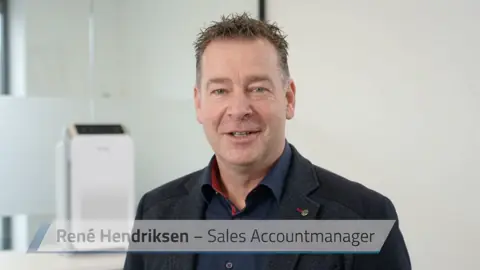
Leave your number. René Hendriksen or a colleague from Lamers will call you back to discuss duct type, diameter and the right equipment.
Or send us a message right away: WhatsApp 06-38048347