

A factory usually has two systems side by side: the general ventilation of the hall and offices, and the process extraction at the machines. The general ventilation falls under the ordinary standards for buildings. That does not apply to process installations: according to the description of the standard, EN 15780 is not intended for industrial process installations. There, your own risk assessment determines the approach.
Lamers Reinigingstechniek supplies equipment for both, from duct cleaners to industrial vacuum cleaners and oil mist and chip extractors. Below you will read how to choose.

Industrial air duct cleaning: which contamination do you encounter?
The type of contamination determines almost everything: the method, the brush, the safety measures and how often you need to return. An overview of the most common situations:
| Sector | Contamination | Particular risk | Approach |
|---|---|---|---|
| Woodworking | Fine wood dust, chips | Dust explosion, fire | Dry, low dust, assess ATEX |
| Metalworking | Grinding dust, oil mist | Fire from oil residue | Degrease, brush, extract |
| Plastics and chemicals | Fumes that condense | Depends on the substance | Check the substance data first |
| Logistics and assembly | Household dust, fibres | Low | As for office ventilation |
| Food and bakery | Flour, grease, moisture | Hygiene, ATEX | See the sector pages |
Additional hygiene and dust rules apply to food and flour. They are worked out under ducts in food processing plants and under extraction in the bakery.
Why contaminated extraction ducts in factories are a health and safety issue
In many factories an extraction installation is a control measure. The Dutch sector organisation Volandis mentions a flexible extraction system close to the work as a solution for metalworking, and gives limit values for inert dust of 10 mg/m³ inhalable and 5 mg/m³ respirable over 8 hours. If the extraction works less well because the duct is clogging up, exposure on the shop floor rises.
Article 4.5 of the Working Conditions Decree (Arbobesluit) states that when contaminated air is removed, sufficient clean air must be supplied at the same time. And article 6.2 requires that ventilation installations are always ready for use. A half blocked duct is not.
In the United Kingdom it is even more concrete: the HSE requires local exhaust ventilation to be thoroughly examined and tested at least every 14 months, with the report kept for 5 years. That is not a Dutch rule, but it is a useful reference point for your own maintenance plan.
Dust explosions and ATEX: what does that mean for cleaning?
Fine wood dust is explosive. The Dutch website Brandveilig.com highlights extraction installations, spark detection and ATEX as points of attention in the wood processing industry. That also applies during cleaning: you are loosening dust in an enclosed space, and that is exactly what you need to be careful with.
Agreements for cleaning in dust sensitive installations
- Work from the company's explosion protection document: which zones are there and which equipment is permitted in them?
- Remove coarse dust first with a suitable industrial vacuum cleaner, so no more dust is stirred up than necessary.
- Shut the installation down, lock it out and check that spark detection and extinguishing systems are in the correct setting.
- Use negative pressure and seal off the run, so loosened dust is removed immediately.
- Record what you cleaned and what was not accessible.
Whether a specific machine is suitable for an EX zone is something to check with Lamers before you use it. Do not assume that a standard 230 volt version is automatically allowed there.
Which equipment suits extraction ducts in industry?
Industrial ducts are often larger and longer than in an office. So look first at the size and the length.
| Duct | Suitable approach | Explanation |
|---|---|---|
| 100 to 600 mm, round or square, up to 30 m | DC4 brushing machine | Steel shaft keeps the brush centred, automatic direction of rotation |
| Small pipes from 30 mm, many bends | Intelligent Airnozzle | Compressed air with camera, compressor 700 L/min or more at around 10 bar |
| Larger than 600 mm | Ask for advice | Other manufacturers have machines up to 1,200 mm, for comparison |
| Housings, cyclones, filter casings | Industrial vacuum and manual work | Make accessible through an inspection hatch |
The Electric duct brushing machine for cleaning contractors is the workhorse choice for round and square ducts up to 600 mm. In the large package, Danduct also supplies an aggressive brush set for stubborn deposits. For small compressed air lines or places where you want to see what you are doing, compressed air duct cleaning for cleaning contractors is a good fit.
For comparison: LIFA AIR has the CombiCleaner 40 for ducts from 400 to 1,200 mm with a 40 metre shaft. If you work with such sizes, ask Lamers for advice on the right machine. The whole range is listed under duct cleaning kit for cleaning contractors.
Planning: when do you clean industrial ducts?
There is no fixed frequency. A good schedule follows from three things: how much dust enters the system each week, how quickly the extraction power declines, and what happens if things go wrong.
- Measure the performance. After cleaning, record the air velocity or negative pressure at the extraction points. That is your baseline.
- Inspect periodically. Look through inspection hatches or with a camera to see how quickly the layer builds up.
- Link it to downtime. Schedule cleaning during the planned maintenance shutdown, so production does not suffer.
- Record everything. Keep readings and photos, so you can compare next time.
Make sure there are enough inspection openings. The Eurovent recommendation mentions openings at most 10 metres apart or after two bends of 45 degrees or more, and for ducts above 500 mm a hatch of at least 500 by 400 mm. With duct sealing balloon for cleaning contractors you keep the dirt inside the duct while you work.
Legionella in cooling towers and air humidification in industry
Not every industrial risk is dust. Anyone with wet cooling towers or air humidification has to deal with legionella. Article 4.87b of the Working Conditions Decree (Arbobesluit) regulates measures for air humidification installations. According to the National Institute for Public Health and the Environment (RIVM), wet cooling towers require a risk analysis, a management plan and a logbook, with ISSO 55.3 as guidance.
A clean duct downstream of the humidifier is part of that management. Include it in your inspection round. If you are a cleaning contractor carrying out these jobs for factories, read how to choose equipment per assignment under duct cleaning business.
Checklist for industrial ductwork cleaning before you start
The points above come together in one practical checklist. Go through it with the plant manager or the person responsible for health and safety before any work starts. It adds no new rules, it simply puts the steps from this page in order.
- System: is this general ventilation or process extraction, and which standard or risk assessment applies?
- Substance: what is in the duct, and what do the substance data say about fire, explosion and exposure?
- Zones: are there EX zones, and is the equipment you plan to use allowed there?
- Access: are there enough inspection openings, and are the duct sizes within the range of your machine?
- Isolation: is the installation shut down and locked out, and are spark detection and extinguishing systems in the right setting?
- Containment: is the run sealed and under continuous negative pressure?
- Record: are baseline readings, photos and any inaccessible sections written down?
If one of these points cannot be answered, that is the question to put to the client or to Lamers first.
Air duct cleaning equipment from Lamers at a glance
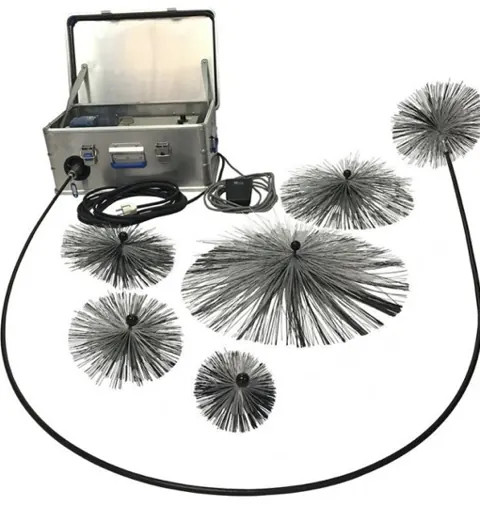 DC4 duct cleaning machineDC4: electric, up to 30 m, ducts from 100 to 600 mm
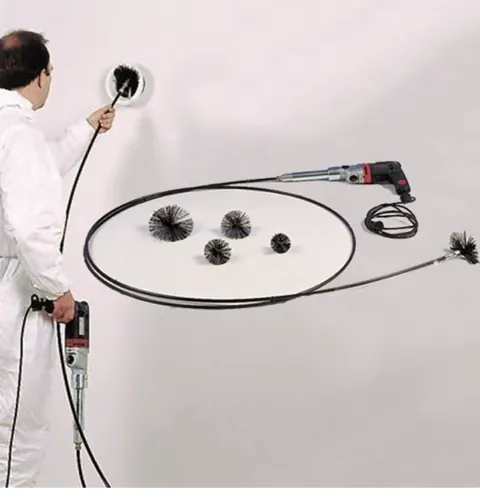 PD4 duct cleanerPD4: runs on a power drill, shaft 2.5 to 7.5 m
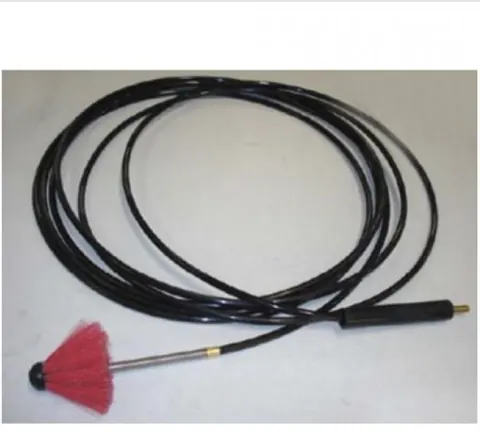 PD2 duct cleanerPD2: compact duct cleaner, specifications via Lamers
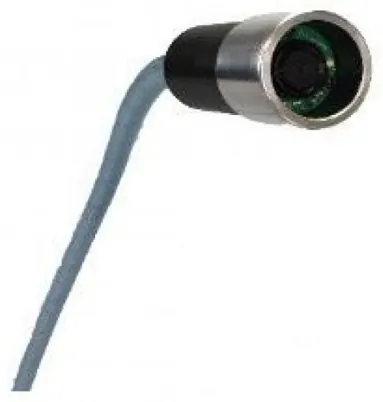 Intelligent AirnozzleCompressed air with camera, ducts from 30 mm
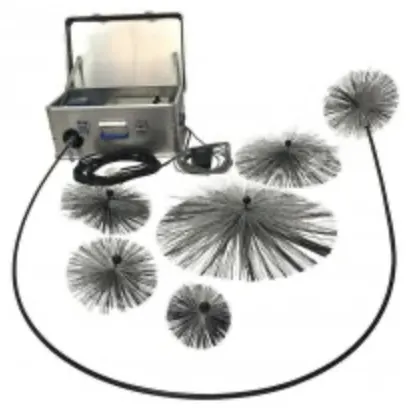 Duct cleaning brushesBrushes and shafts: soft, standard or Tynex
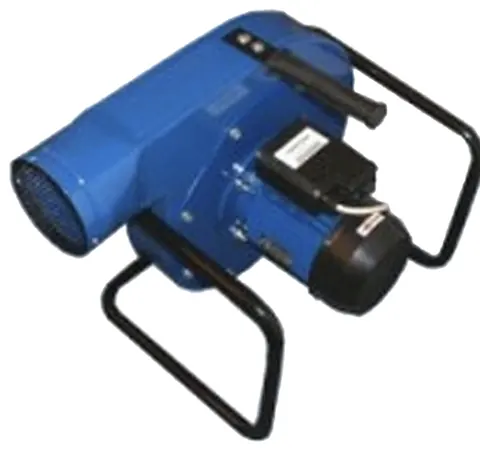 Duct sealing and extractionDuct balloons, diffuser caps and extraction
Frequently asked questions: industrial duct cleaning
Does EN 15780 apply to air ducts in industry?
According to the description of the standard, EN 15780 is not intended for industrial process installations. The general ventilation of the hall, offices and canteen does fall under it. For process extraction you determine the cleaning approach based on your own risk assessment, the health and safety rules and the data on the substances you work with.
Why do extraction ducts in a factory need cleaning?
When an extraction duct clogs up, the extraction power at the machine drops and exposure on the shop floor rises. Article 6.2 of the Working Conditions Decree (Arbobesluit) requires that ventilation installations are always ready for use. In addition, accumulated combustible dust or oil can create a fire or explosion risk.
Which dust limit values apply in the Dutch metalworking industry?
Volandis gives 10 mg/m³ inhalable and 5 mg/m³ respirable for inert dust, as an average over 8 hours. A flexible extraction system close to the work is one of the measures mentioned. If that extraction works poorly because of a contaminated duct, those values become harder to meet.
How often should industrial local exhaust ventilation be tested?
No fixed term has been laid down in the Netherlands. In the United Kingdom, the HSE requires local exhaust ventilation to be thoroughly examined and tested at least every 14 months, with a report kept for 5 years. That is a useful reference point for your own maintenance plan.
How do you clean extraction ducts in the wood industry safely?
Fine wood dust is explosive. Work from the explosion protection document, first remove coarse dust with a suitable industrial vacuum cleaner, shut down and lock out the installation, and clean under negative pressure with the run sealed off. Check whether your equipment may be used in the relevant EX zone.
Which machine do you use for industrial ducts up to 600 mm?
The DC4 from Danduct Clean cleans round and square ducts from 100 to 600 mm over a length of up to 30 metres, including vertical runs and 90 degree bends. Besides the standard brush set, the large package contains an aggressive brush set for stubborn deposits.
What do you do with industrial air ducts larger than 600 mm?
The DC4 goes up to 600 mm. Machines for larger ducts exist elsewhere, such as the CombiCleaner 40 from LIFA AIR for 400 to 1,200 mm, for comparison. Ask Lamers for advice on the right machine and method for your duct sizes before you choose an approach.
How many inspection hatches does an industrial extraction duct need?
The Eurovent recommendation mentions inspection openings at most 10 metres apart or after no more than two bends of 45 degrees or more. Ducts above 500 mm need a hatch of at least 500 by 400 mm, and openings on both sides of dampers, filters, fans and heat exchangers.
How do you keep dust out of the factory hall during industrial duct cleaning?
Seal off the section being cleaned with duct balloons and close the openings. Keep the run under continuous negative pressure with an extraction unit. If it exhausts inside the building, American guidelines specify a HEPA filter of 99.97 percent at 0.3 µm. That way the loosened dust goes straight into the filter.
What should you do about legionella in industrial air humidification?
Article 4.87b of the Working Conditions Decree (Arbobesluit) regulates measures for air humidification installations. According to RIVM, wet cooling towers need a risk analysis, management plan and logbook, with ISSO 55.3 as guidance. Include the ducts downstream of the humidifier in your inspection round and keep them clean.
Sources and reference date
All facts on this page were checked on 6 October 2026.
- DIN Media: DIN EN 15780 scope
- Volandis: metalworker (in Dutch)
- Brandveilig.com: dust explosions in the wood processing industry (in Dutch)
- HSE: local exhaust ventilation FAQ
- Working Conditions Decree (Arbobesluit) article 4.5 (in Dutch)
- RIVM: legionella in wet cooling towers (in Dutch)
- Danduct: DC4
- LIFA AIR: ventilation hygiene
Editorial team: Lamers Reinigingstechniek B.V., supplier of professional air duct cleaning equipment in Zelhem, the Netherlands. Updated on . See also Lamers cleaning equipment for cleaning contractors.
Request a quote or advice from Lamers

René Hendriksen, Sales Account Manager at Lamers, advises you on the machine, brushes and extraction for your jobs.
Briefly tell us what you clean (duct type, diameter, length, contamination and sector). Lamers will contact you with advice and a tailored quote.
Prefer direct contact? Call +31 (0)314 623 341, message us on WhatsApp 06-38048347 or email info@lamersequipment.nl.
Prefer a quick call first? Lamers will call you back

Leave your number. René Hendriksen or a colleague from Lamers will call you back to discuss duct type, diameter and the right equipment.
Or send us a message right away: WhatsApp 06-38048347