

This guide is for school boards, accommodation advisers, caretakers and facilities teams. You will read what the rules ask, why new schools are sometimes dirty at handover, how to plan the work in the holidays and which equipment suits central and decentralised systems. Lamers Reinigingstechniek in Zelhem supplies that equipment from Danduct Clean.

Frisse Scholen ventilation: what does the programme of requirements ask?
The Frisse Scholen programme of requirements has three ambition levels: C is sufficient, B is good and A is excellent. Each level comes with a maximum CO2 concentration in the classroom.
| Frisse Scholen class | Ambition | Maximum CO2 |
|---|---|---|
| C | Sufficient | 1,200 ppm |
| B | Good | 950 ppm |
| A | Excellent | 800 ppm |
An installation that reaches class B on paper only does so if enough air actually flows through it. Dirty filters and ducts restrict the airflow. In a laboratory study of an MVHR unit, heavily fouled filters delivered 37 percent less supply air. Less fresh air means CO2 rises faster in a full classroom, and you can read that on the meter.
Which legal rules apply to ventilation ducts in school buildings?
| Rule | Content | For whom |
|---|---|---|
| Building Works Living Environment Decree (Bbl) art. 3.143 | CO2 meter in every classroom | Primary, secondary and special education |
| Bbl art. 3.67 and further | Ventilation provision that prevents damage to health | Existing buildings |
| Working Conditions Decree (Arbobesluit) art. 6.2 paragraphs 1 and 2 | Sufficient uncontaminated air, installation in good working order | Teachers and other staff |
| Arbobesluit art. 6.2 paragraph 4 | Signalling of faults where needed for health | Installations in use |
None of these rules states a cleaning frequency. According to a trade article on EN 15780, schools fall into the medium risk group, together with offices and hotels, with a dust limit below 3.0 g/m² and up to 4.5 g/m² for secondary ducts. Those values come from a trade publication; the text of the standard itself was not consulted for them.
How the standards fit together is explained under VDI 6022 ventilation hygiene.
Construction dust in new schools: inspect at handover
A new school building looks clean, but the RVO process manual for Frisse Scholen (RVO is the Netherlands Enterprise Agency) warns that air ducts in newly delivered schools turn out to be contaminated with construction dust. That dust goes straight into the classrooms during the first weeks of heating. A handover inspection prevents you from starting with a dirty installation.
- Have a camera inspection carried out before occupation, covering the main ducts and a sample of classroom ducts.
- Agree in the construction contract that ducts are capped during building work.
- Have demonstrably contaminated sections cleaned before the school accepts the building.
- Keep the inspection report as a baseline for later maintenance.
A handover inspection costs little time compared with the weeks of complaints that follow when a new building blows construction dust into fresh classrooms. It also gives the school board a clear document to discuss with the contractor if cleaning turns out to be needed.
Central or decentralised: what does it mean for education ductwork cleaning?
Schools broadly have two kinds of system. With a central system, one air handling unit sits on the roof or in a plant room, with long ducts to all classrooms. With decentralised ventilation, every classroom has its own unit with short ducts to the facade.
| Feature | Central system | Decentralised units |
|---|---|---|
| Duct length | Long, with branches | Short, per classroom |
| Filter replacement | In the air handling unit | Installer has to visit every classroom |
| Suitable cleaner | Brushing machine with a long shaft | Compact cleaner or compressed air |
| Planning | Per wing or floor | Per classroom, fits in an afternoon |
The RVO manual points out that with decentralised ventilation the installer has to visit every classroom to replace filters. Combine that visit with a check of the valves and the short duct, and you only need to enter the classroom once.
How to plan school ventilation duct cleaning in the holidays
Schools are the only buildings with long, predictable periods without users. Make use of that. An annual schedule that works well:
- Autumn half term: filter check after the first weeks of heating.
- Christmas holidays: camera inspection of the central ducts.
- Spring half term: replace filters in decentralised units.
- Summer holidays: the major work: cleaning the ducts where the inspection indicated it, with sealing caps and extraction.
Afterwards, compare the CO2 data from the first school week with the data from before the holiday. That shows whether the work had an effect, without extra measuring equipment.
Keep the schedule in one shared document that the caretaker, the installer and the school board can all see. When the same file holds the inspection photos, the filter dates and the CO2 readings, the next maintenance round starts from facts instead of memory.
Which equipment suits air ducts in schools?
For the long ducts of a central system, the DC4 duct cleaner for cleaning contractors is suitable: ducts from 100 to 600 mm, round and square, up to 30 metres and through 90 degree bends. For the short ducts of decentralised units, the PD4 duct cleaner for cleaning contractors works well; you drive it with a cordless drill, which is handy in classrooms without a socket in the right place. The compact PD2 duct cleaning tool is another option for maintenance work; request its specifications from Lamers.
During the work, put a dust tight screen around the work area and keep the duct under negative pressure. The materials for this are listed under duct sealing and extraction for cleaning contractors. In addition, choose ventilation duct brush based on the duct material: soft for duct board and sheet metal, Tynex for stubborn dirt. An overview of all machines is available under air duct cleaning tools for cleaning contractors.
Fictional example: a primary school with twelve classrooms
Fictional example. A primary school with twelve classrooms and decentralised units often sees CO2 levels above 1,200 ppm in winter, the limit of class C. The caretaker notices the filters have not been replaced for a long time. In the spring half term, the installer replaces all filters and cleans the short ducts per classroom with a compact cleaner. In the weeks that follow, the school reads out the CO2 meters and compares them with the period before. The costs depend on the number of units and the contamination, so the price is on quotation.
How to estimate the costs of such a project is covered under air duct cleaning prices. For similar buildings see air duct cleaning in offices, and other sectors are listed under ductwork cleaning per industry. If you are unsure about the right machine, you can request a quotation for cleaning contractors through a callback request or a question.
Air duct cleaning equipment from Lamers at a glance
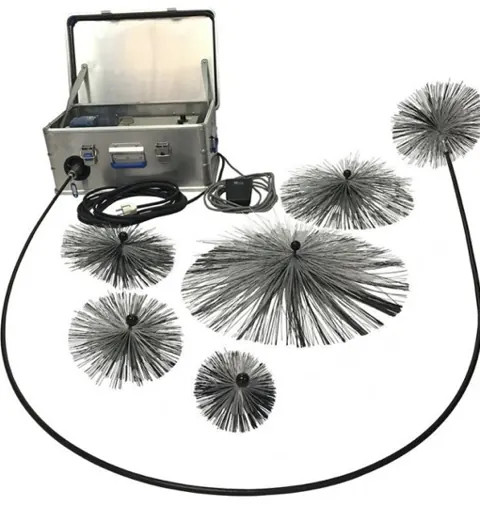 DC4 duct cleaning machineDC4: electric, up to 30 m, ducts from 100 to 600 mm
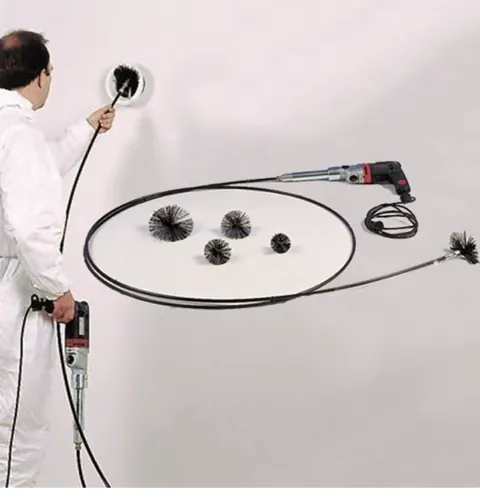 PD4 duct cleanerPD4: runs on a power drill, shaft 2.5 to 7.5 m
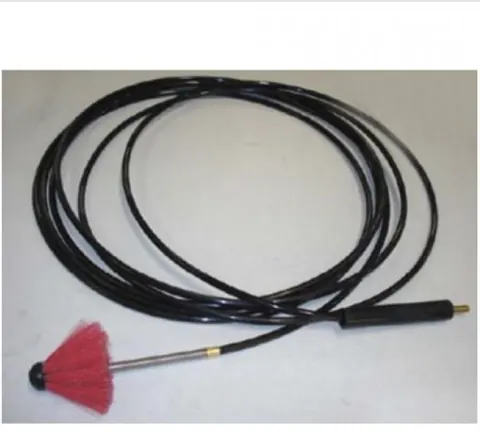 PD2 duct cleanerPD2: compact duct cleaner, specifications via Lamers
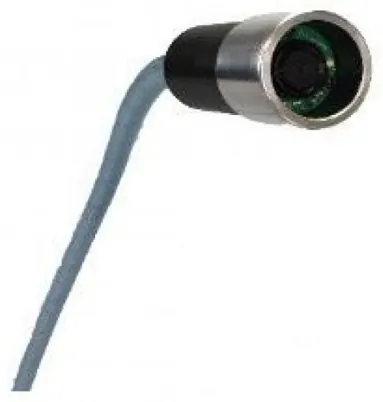 Intelligent AirnozzleCompressed air with camera, ducts from 30 mm
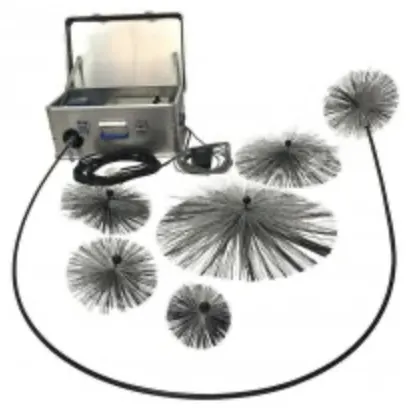 Duct cleaning brushesBrushes and shafts: soft, standard or Tynex
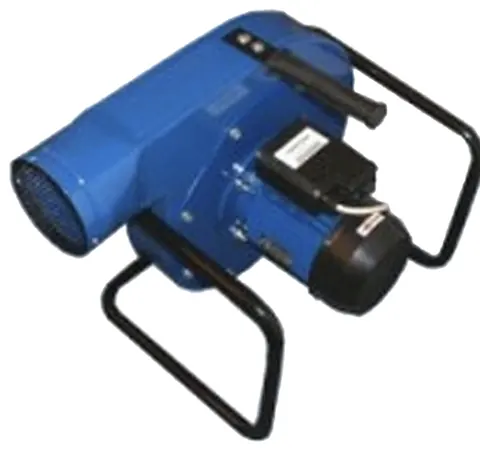 Duct sealing and extractionDuct balloons, diffuser caps and extraction
Frequently asked questions: school air duct cleaning
Is a school in the Netherlands required to have its air ducts cleaned?
There is no cleaning frequency in the law. However, under the Bbl an existing school building must have a ventilation provision that prevents damage to health, and the Arbobesluit requires sufficient uncontaminated air and an installation in good working order for staff. The Frisse Scholen programme also asks for periodic technical and hygienic maintenance of climate installations.
Which CO2 level must a classroom reach under Frisse Scholen?
That depends on the ambition level. Class C, sufficient, stands for a maximum of 1,200 ppm. Class B, good, for a maximum of 950 ppm. Class A, excellent, for a maximum of 800 ppm. An installation only reaches those values if filters and ducts are clean enough to deliver the designed volume of air.
Must every Dutch classroom have a CO2 meter?
Yes. Under article 3.143 of the Bbl, every classroom in primary, secondary and special education must have a CO2 meter. That meter is also a good aid for maintenance: compare the readings before and after replacing filters or cleaning ducts and you will see whether the work had an effect.
Can air ducts in a newly built school already be contaminated?
Yes. The RVO process manual for Frisse Scholen reports that air ducts in newly delivered schools turn out to be contaminated with construction dust. That is a strong argument for a handover inspection with a camera, before the school starts using the building. Also agree in the construction contract that ducts are capped during building work.
When is the best time to clean the ventilation ducts of a school?
During the school holidays, and especially in summer, when the building is empty for weeks. Shorter holidays are suitable for filter replacement and inspection. With decentralised units per classroom, the work sometimes also fits into a free afternoon. That way you avoid dust and noise during lessons.
What is the difference between central and decentralised school ventilation when cleaning?
A central system has long ducts from one air handling unit; for that you use a brushing machine with a long shaft. Decentralised units have short ducts per classroom; a compact cleaner or compressed air works better there. According to RVO, the installer also has to visit every classroom for filter replacement with decentralised ventilation.
Which machine suits the short ducts of decentralised school units?
For short ducts, the PD4 from Danduct is handy. You drive it with a cordless or mains power drill, the shaft is 2.5 to 7.5 metres and brushes from 100 to 600 mm are available separately. With a cordless drill you do not depend on a socket in the classroom, which saves time per room.
Which dust limit applies to air ducts in school buildings?
According to a trade article on EN 15780, schools fall into the medium risk group, with a dust limit below 3.0 g/m² and up to 4.5 g/m² for secondary ducts. That comes from a trade publication and not directly from the text of the standard. Use it as a guide and ask the inspector to state the measuring method in the report.
How often should filters in school ventilation be replaced?
Follow the instructions of the manufacturer of your unit. For home ventilation, Milieu Centraal (Dutch public information centre) and Brink advise replacing filters at least twice a year, and more often near a busy road. A classroom with many pupils puts more load on filters than a home, so check them in autumn and spring.
Can a school caretaker clean the ventilation ducts himself?
A caretaker can clean grilles and valves perfectly well. For cleaning the ducts you need a brushing machine or compact cleaner, plus sealing caps and extraction with a HEPA filter. Many school boards have that work done by an installer or cleaning contractor. Lamers supplies the equipment to whoever carries out the work.
Sources and reference date
All facts on this page were checked on 6 October 2026.
- RVO Frisse Scholen: ventilation measure (in Dutch)
- RVO Frisse Scholen process manual (in Dutch)
- IPLO: CO2 meter in schools (in Dutch)
- Working Conditions Decree article 6.2, ventilation (in Dutch)
- MODBS: Keep it Clean
- Energies 2025: filter fouling in an MVHR unit
- Brink: original filters (in Dutch)
- Danduct PD4 and PD5
Editorial team: Lamers Reinigingstechniek B.V., supplier of professional air duct cleaning equipment in Zelhem, the Netherlands. Updated on . See also Lamers Zelhem for cleaning contractors.
Request a quote or advice from Lamers

René Hendriksen, Sales Account Manager at Lamers, advises you on the machine, brushes and extraction for your jobs.
Briefly tell us what you clean (duct type, diameter, length, contamination and sector). Lamers will contact you with advice and a tailored quote.
Prefer direct contact? Call +31 (0)314 623 341, message us on WhatsApp 06-38048347 or email info@lamersequipment.nl.
Prefer a quick call first? Lamers will call you back
Leave your number. René Hendriksen or a colleague from Lamers will call you back to discuss duct type, diameter and the right equipment.
Or send us a message right away: WhatsApp 06-38048347