

This guide covers local exhaust ventilation, dust extraction and process extraction: from the capture hood or extraction arm at the machine, through hoses and ducts, to the filter and the fan. It is intended for cleaning contractors, installers and facilities teams who maintain such installations and are looking for equipment to do so.
Facts and limit values were checked with a reference date of 6 October 2026. Lamers Reinigingstechniek in Zelhem, the Netherlands, supplies the equipment; always check with Lamers first before using any equipment in a potentially explosive atmosphere.

Extraction system cleaning: which types do you find in workshops and production?
Not every extraction installation is the same. The type determines the contamination you find and how you deal with it.
| Type of extraction | Where you find it | Typical contamination |
|---|---|---|
| Local exhaust ventilation | Welding station, grinding table, extraction arm at a workbench | Fine dust, fumes, deposits in arm and hose |
| Dust extraction | Woodworking, packaging, mixing, sawing | Coarse and fine dust, chips, settling in horizontal sections |
| Process extraction | Extraction around a production line or oven | Vapour, mist, sticky deposits |
| General room extraction | General exhaust from a hall | Dust from the room, less concentrated |
Close to the source the concentration is highest. Volandis (Dutch construction industry knowledge centre) recommends a flexible extraction system close to the work in metalworking. Precisely those short, flexible parts and the first metres of duct behind them get dirty fastest. The broader sector approach, including legionella in cooling towers, is in the guide on extraction ducts in factories.
Why cleaning extraction installations is more than housekeeping
An extraction system is a protective measure. If the air velocity in the ducts drops because of deposits or a full filter, the capture hood takes away less and the dust stays in the operator's breathing zone.
- Exposure: according to Volandis, the limit values for inert dust are 10 mg/m3 inhalable and 5 mg/m3 respirable (8 hour time weighted average). An extraction system that no longer works properly makes it harder to stay below those values.
- Supplying clean air: article 4.5 of the Working Conditions Decree (Arbobesluit) states that when contaminated air is removed, enough clean air must be supplied at the same time. An extraction system that pulls away a lot of air therefore needs a working supply.
- In working order: Arboportaal (the Dutch government portal on working conditions) advises replacing dust filters regularly and cleaning the ducts. That is advice, not a statutory interval.
What the law does and does not literally require on ventilation is explained in the article on the legal duty for air ducts.
Combustible dust in dust extraction: what does it mean for your work?
Much of the dust released in production is combustible: think of wood dust, flour and sugar. Built up in a duct or filter, it becomes a risk as soon as it is stirred up.
- In a memo for the bakery sector, TNO states that a dust explosion is only possible above 60 g/m3 of fine dust, such as flour or sugar. Precisely when you loosen deposits, you can create such a cloud locally.
- For the wood processing industry, Brandveilig.com points to the explosion hazard from fine wood dust, with attention to extraction installations, spark detection and ATEX.
- According to TNO, an industrial, ATEX 114 certified vacuum cleaner is necessary in EX zones.
- TNO and the Belgian organisation Alimento advise against using compressed air for cleaning in bakeries, because it blows dust into the air.
Important: in an ATEX zone, only use equipment that is suitable and certified for it. Whether a machine or extraction unit from the Lamers range is suitable for your zone is something you check with Lamers beforehand. Never assume it. For bakeries there is a separate guide on flour dust in bakery ducts.
How often do you test or clean local exhaust ventilation?
Dutch law sets no fixed cleaning interval for workshop extraction. EN 15780, the European standard for the cleanliness of ventilation systems, does not apply to industrial process installations. You therefore base your schedule on measurements, contamination and the advice of the installation manufacturer.
For comparison you can look at the United Kingdom. There the HSE requires local exhaust ventilation to be thoroughly examined and tested at least every 14 months, with the record kept for 5 years. That is British regulation and does not apply in the Netherlands, but it is a useful benchmark for your own maintenance plan.
| Signal | What it may mean | Action |
|---|---|---|
| Dust stays visible around the machine | Capture velocity too low | Check the filter and the first metres of duct |
| Layer of dust on the floor or duct bottom at a hatch | Settling in a horizontal section | Clean the duct, have the air velocity measured |
| Pressure drop across the filter rises quickly | Filter is filling up | Clean or replace the filter as the manufacturer specifies |
| Extraction arm or hose sags or is torn | Leakage, less suction | Replace the part |
| New machine or different product on the line | Different dust load | Reassess the schedule |
Keep a simple log of these signals per extraction point. Over a few rounds you will see which points need attention more often, and your planning becomes based on your own observations instead of guesswork.
Dust extraction cleaning: a five step approach
The approach below is practical advice. Adapt it to the dust type, the installation and the safety instructions of the site.
- Assess the risk first: which dust, is it combustible, is there an EX zone? Your choice of equipment follows from that.
- Switch off and seal: installation and machine off, section sealed so dust does not escape into the hall. With the products for duct sealing balloon you keep the section being cleaned under negative pressure.
- Source first: clean or replace the capture hood, extraction arm and hose, as that is where most deposits are.
- Ducts run by run: with a rotating brush through the hatches, dry and without blowing dust around.
- Filter and fan: as the manufacturer specifies, followed by a function test and photos for the file.
If the installation has long horizontal runs without hatches, fit extra inspection hatches first. That stops you pushing dirt further into a duct.
Points to record in your job sheet after each round: the dust type found, the condition of hoses and arms, the filter pressure drop before and after, and any parts replaced. That record also helps the client show that the installation is kept in working order.
Which Lamers equipment suits extraction ducts?
For the round and rectangular ducts behind an extraction point, you need equipment that loosens dust without blowing it into the room. In the Lamers range of air duct cleaning tools, these options stand out:
| Equipment | Suitable for | Note for extraction systems |
|---|---|---|
| DC4 (Danduct Clean) | Ducts 100 to 600 mm, shaft up to 30 m, vertical and through 90 degree bends | Runs on 230 volts: check suitability for EX zones |
| Brushes normal, soft and Tynex | Light deposits to more stubborn dirt | Tynex for tougher deposits |
| Sealing balloons and extraction unit | Sealing a section and keeping it under negative pressure | HEPA when exhausting indoors |
| Intelligent Airnozzle | Narrow ducts from 30 mm with camera | Works with compressed air: discuss the risk first with combustible dust |
With an DC4 duct cleaner you reach long runs from a single hatch. For sticky process deposits it helps to spend time air duct brush: a more aggressive Tynex brush loosens more than a soft one. Lamers also has categories such as industrial vacuum cleaners and oil mist and chip extractors, which often come up in workshops too.
Kitchen extraction and workshop extraction: not the same
Kitchen extraction in hospitality or a staff restaurant looks like process extraction, but the main problem is grease, and that comes with its own rules and measuring methods. For that, see the guide on removing grease from kitchen extraction. Comfort ventilation with an air handling unit and grilles is handled differently again: see the guide on cleaning a complete ventilation system.
Fictional example: an installer maintains the wood dust extraction at a furniture maker and the ventilation at an office. At the furniture maker he starts by asking about the EX zone and keeps the dust inside the sealed duct. At the office the focus is on filters and grilles. Same trade, different risk, different preparation.
If you offer this as a service, also look at the page for installers who clean ductwork. Questions about the right machine or zone suitability? Duct cleaner quotation.
Air duct cleaning equipment from Lamers at a glance
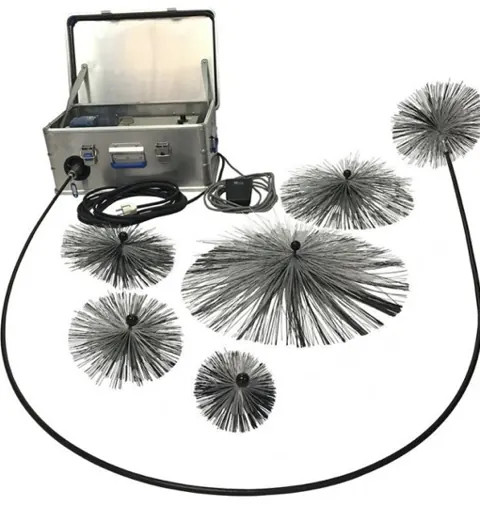 DC4 duct cleaning machineDC4: electric, up to 30 m, ducts from 100 to 600 mm
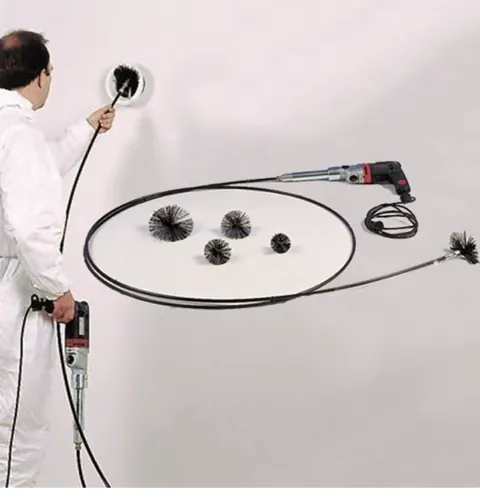 PD4 duct cleanerPD4: runs on a power drill, shaft 2.5 to 7.5 m
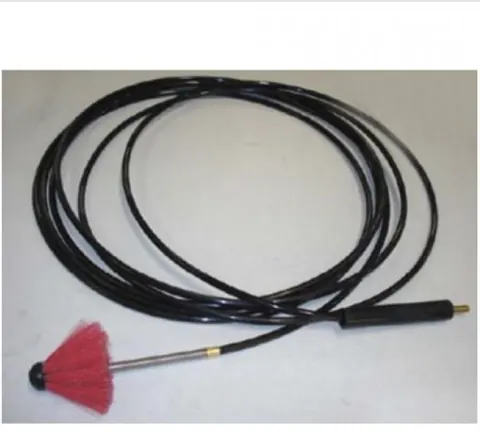 PD2 duct cleanerPD2: compact duct cleaner, specifications via Lamers
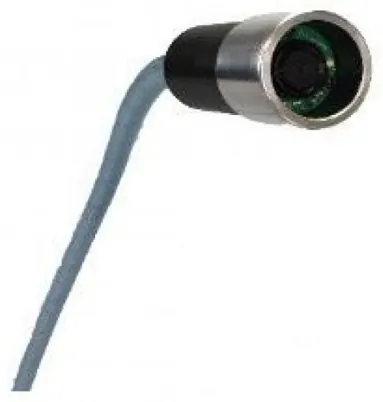 Intelligent AirnozzleCompressed air with camera, ducts from 30 mm
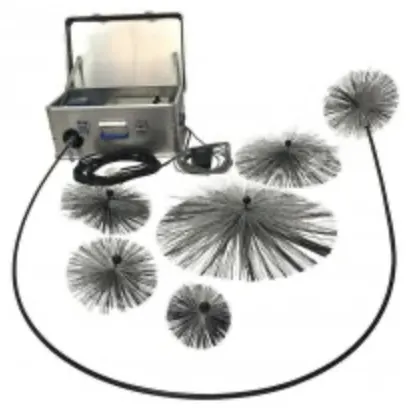 Duct cleaning brushesBrushes and shafts: soft, standard or Tynex
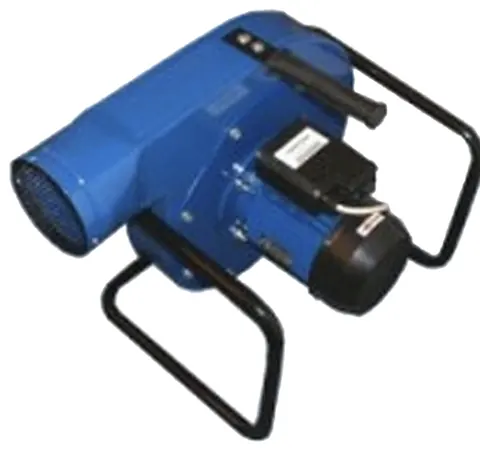 Duct sealing and extractionDuct balloons, diffuser caps and extraction
Frequently asked questions: extraction system cleaning
What is the difference between local exhaust and general room extraction when cleaning?
Local exhaust ventilation captures dust or fumes directly at the machine or welding station, with a hood or arm. That is where the concentration is highest and where the arm, hose and first metres of duct get dirty fastest. General room extraction removes air from the whole hall and usually gets dirty more slowly and evenly. So schedule the source more often.
How often should workshop extraction be cleaned in the Netherlands?
There is no statutory interval in the Netherlands, and EN 15780 does not apply to industrial process installations. Base your schedule on measurements, visible contamination and the manufacturer's instructions. For comparison: in the United Kingdom the HSE requires local exhaust ventilation to be examined and tested at least every 14 months.
Why is built up dust in a dust extraction system dangerous?
Much production dust is combustible. As long as it lies as a layer in a duct it looks harmless, but when stirred up a dust cloud can form. TNO gives an explosion limit from 60 g/m3 for fine dust such as flour and sugar. In addition, a dirty installation captures less, so workers breathe in more dust.
Which limit values for inert dust apply in a workshop with extraction?
Volandis gives 10 mg/m3 inhalable and 5 mg/m3 respirable for inert dust, as an 8 hour time weighted average. A properly working local exhaust system is one of the measures for staying below those values. For specific substances such as flour or wood dust, other values or advice may apply.
May you use the DC4 to clean extraction ducts in an ATEX zone?
Do not simply assume so. The DC4 runs on 230 volts as standard. Whether a machine or extraction unit is suitable for a particular EX zone is something you check with Lamers beforehand. For EX zones in bakeries, TNO states that an ATEX 114 certified industrial vacuum cleaner is necessary.
Can you blow a dust extraction system clean with compressed air?
With combustible dust that is not advisable. TNO and Alimento advise the bakery sector not to use compressed air for cleaning, because it blows dust into the air. In extraction ducts, preferably work with a rotating brush under negative pressure. If you still want to use compressed air in narrow ducts, discuss the risk first.
What does article 4.5 of the Dutch Working Conditions Decree say about workshop extraction?
Article 4.5 of the Arbobesluit deals with hazardous substances and states that when contaminated air is removed, enough clean air must be supplied at the same time. A powerful extraction system without a working air supply therefore falls short. When maintaining extraction, include the supply of fresh air in your checks as well.
Which brush do you use for sticky deposits in process extraction ducts?
For stubborn deposits, a more aggressive brush such as the Danduct Clean Tynex version makes more sense than a soft brush. The brushes are available for ducts from 100 to 600 mm. For greasy deposits from a kitchen, other methods apply; wet cleaning methods are often needed there.
How do you stop dust escaping into the production hall while cleaning extraction ducts?
Seal the section being cleaned with sealing balloons or caps and keep it under continuous negative pressure with an extraction unit. If that unit exhausts inside the building, a HEPA filter with 99.97% at 0.3 micron is the starting point. Clean with a rotating brush and do not blow the dust into the room.
Does kitchen extraction belong in the same maintenance as workshop extraction?
No, schedule it separately. With kitchen extraction, grease is the main problem, with its own measuring methods in microns and requirements from fire insurers. With workshop extraction it is about dust, exposure and sometimes explosion risk. The equipment may partly overlap, but preparation, method and reporting differ.
Sources and reference date
All facts on this page were checked on 6 October 2026.
- TNO Stofvrij werken: memo on vacuum cleaners in the bakery sector (in Dutch)
- Volandis: metalworker (in Dutch)
- HSE: local exhaust ventilation FAQ
- Working Conditions Decree (Arbobesluit) article 4.5 (in Dutch)
- Brandveilig.com: dust explosions in the wood processing industry (in Dutch)
- Arboportaal: ventilation (in Dutch)
- Alimento: flour dust in bakeries (in Dutch)
- Lamers: DC4 duct cleaner (in Dutch)
Editorial team: Lamers Reinigingstechniek B.V., supplier of professional air duct cleaning equipment in Zelhem, the Netherlands. Updated on . See also Lamers Reinigingstechniek.
Request a quote or advice from Lamers

René Hendriksen, Sales Account Manager at Lamers, advises you on the machine, brushes and extraction for your jobs.
Briefly tell us what you clean (duct type, diameter, length, contamination and sector). Lamers will contact you with advice and a tailored quote.
Prefer direct contact? Call +31 (0)314 623 341, message us on WhatsApp 06-38048347 or email info@lamersequipment.nl.
Prefer a quick call first? Lamers will call you back

Leave your number. René Hendriksen or a colleague from Lamers will call you back to discuss duct type, diameter and the right equipment.
Or send us a message right away: WhatsApp 06-38048347