

Guests notice a dirty duct sooner than you might think: a grey ring around the bathroom valve, a musty smell on entering the room or a humming fan. These are small things that end up in reviews. For your staff, the Dutch Working Conditions Decree (Arbobesluit) applies as usual: sufficient uncontaminated air and an installation that is always ready for use.
Lamers Reinigingstechniek supplies the equipment your facilities team or a contracted cleaning company uses to carry out this work. Below you can read how to organise it.

Which ventilation ducts in a hotel need attention?
| System | Typical contamination | What guests notice | Approach |
|---|---|---|---|
| Bathroom extraction per room | Lint, dust, moisture | Grey valves, damp bathroom | Valves and duct per shaft |
| Central supply to corridors and rooms | Fine dust that passed the filter | Dust on furniture, dry air | Inspection, cleaning per section |
| Function rooms and breakfast room | Dust, sometimes food odours | Stuffy air when the room is full | Include in the annual schedule |
| Restaurant kitchen | Grease | Smell, fire risk | As for restaurant extraction |
| Air humidification, if present | Moisture, biofilm | Not directly | Legionella management |
The kitchen is a story of its own, with grease, fire risk and insurer requirements. We work that out on the page about cooker hood duct cleaning. This page focuses on guest rooms, corridors and function rooms.
Guest room ventilation cleaning without disturbing guests
The biggest challenge in a hotel is not technical but logistical. Bathroom extraction usually runs through vertical shafts: all the rooms stacked above each other share one duct to the roof. That means you work per shaft, not per room.
How to approach it
- Map the shafts. Which rooms are connected to which duct? The installation drawing or the installer will know.
- Choose quiet weeks. Agree with revenue management and housekeeping when a column of rooms can come off sale for a day.
- Work from top to bottom or the other way round, but always do the whole shaft in one go, so you do not have to come back twice.
- Seal the valves in rooms where you are not working, so dust does not escape through another room.
- Have housekeeping check the rooms afterwards before they go back on sale.
Foam caps for sealing valves and diffusers can be found under negative pressure HEPA extraction for cleaning contractors.
Hotel bathroom extract cleaning: small ducts, many bends
The short ducts from valve to shaft are often narrow and have one or two bends. A different machine suits them than the one used in the main duct.
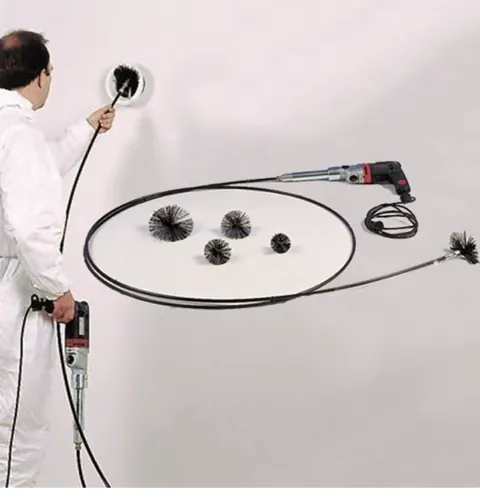
- Danduct PD4 for cleaning contractors is possible with the PD4. You drive it with a cordless drill and the shaft is 2.5 to 7.5 metres long. Danduct itself calls it very user friendly and ideal for small ducts. With a cordless drill there is no need to arrange power in the room.
- With the air nozzle duct cleaning for cleaning contractors, the Intelligent Airnozzle, you clean ducts from 30 mm and see straight away on camera whether the valve duct is clean. You do need a compressor delivering 700 L/min or more at around 10 bar for it, plus a monitor.
- For the vertical shaft itself, with a larger cross section, the DC4 is more suitable: up to 30 metres of reach and also usable vertically.
On the overview page for ventilation duct cleaning tools for cleaning contractors you can see all the machines side by side. If you are unsure which combination suits your shafts, ask for advice on the right machine.
How clean do hotel air ducts need to be?
According to a trade article on EN 15780, a hotel falls into the group of buildings with a medium risk, together with offices and schools. According to that article, this group calls for a dust layer of less than 3.0 g/m², and up to 4.5 g/m² in secondary ducts. Those figures come from a trade publication; we have not consulted the standard itself.
The EN 15780:2025 standard works with cleanliness classes and inspection intervals in months per class. The German guideline VDI 6022 specifies a hygiene inspection every 2 years for installations with air humidification and every 3 years without. More about both can be found under NVRL quality mark.
Practical signs that cleaning is due
The American EPA names three reasons to have ducts cleaned: visible mould, vermin in the duct and excessive dust coming out of the grilles. In a hotel a fourth is added: repeated guest complaints about smell or air in the same rooms. That often points to a single shaft.
Fictional example: complaints about a musty smell on the third floor
Within a few weeks, a city hotel receives several reviews about a musty smell in bathrooms on the same floor. Housekeeping cleans the valves, but the complaints continue.
The facilities team discovers that all the rooms concerned are connected to one vertical shaft. A camera inspection shows that the duct is full of lint and dust, with damp patches where the duct runs along a cold outside wall. As a result the fan on the roof draws less air, so the bathrooms stay damp.
The shaft is cleaned in a quiet week, column by column, with the rooms off sale for one day. Afterwards the installer rebalances the fan. The hotel then includes the shafts in a fixed multi-year schedule.
You see the same pattern in office buildings with toilet blocks. That is covered in more depth under office ventilation duct cleaning.
A multi-year plan for the ventilation ducts in your hotel
There is no fixed statutory cleaning frequency for hotel ducts in the Netherlands. However, the Building Works Living Environment Decree (Bbl) requires almost every existing building to have a ventilation provision that prevents damage to health. And for your employees, Article 6.2 of the Arbobesluit calls for sufficient clean air.
| Component | Who | Rhythm |
|---|---|---|
| Valves and grilles in the rooms | Housekeeping | Part of the periodic room cleaning |
| Filters in the air handling unit | Facilities team or installer | According to the manufacturer |
| Inspection of shafts and main ducts | Facilities team | According to your own schedule and complaints |
| Cleaning per shaft | Facilities team or cleaning contractor | Based on inspection |
| Kitchen extraction | Specialist | At least annually, see hospitality |
How other buildings choose their rhythm is explained under how often should air ducts be cleaned. If you want your facilities team to clean the ducts in house, request a quote for a kit that matches your shafts and valve sizes.
Air duct cleaning equipment from Lamers at a glance
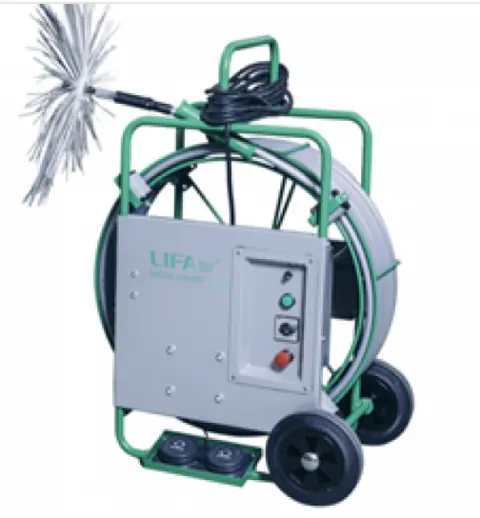
 DC4 duct cleaning machineDC4: electric, up to 30 m, ducts from 100 to 600 mm
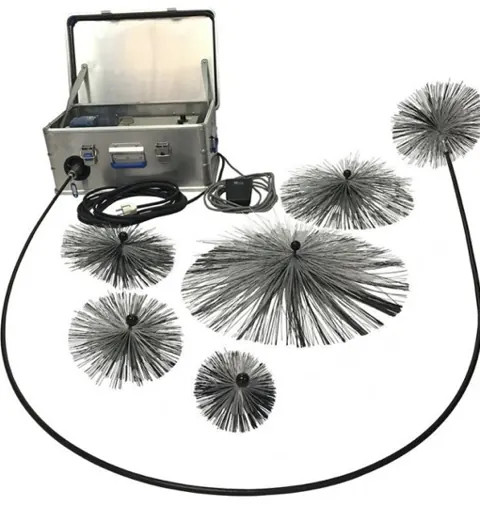
 PD4 duct cleanerPD4: runs on a power drill, shaft 2.5 to 7.5 m
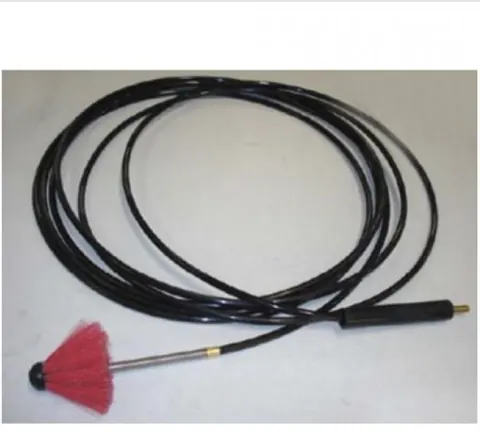 PD2 duct cleanerPD2: compact duct cleaner, specifications via Lamers
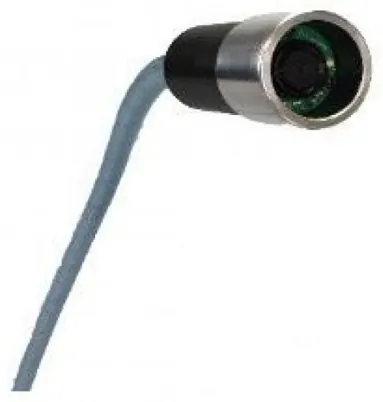 Intelligent AirnozzleCompressed air with camera, ducts from 30 mm
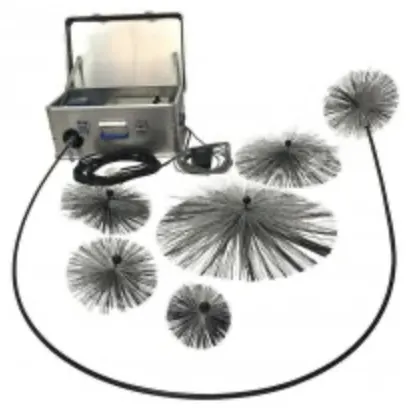 Duct cleaning brushesBrushes and shafts: soft, standard or Tynex
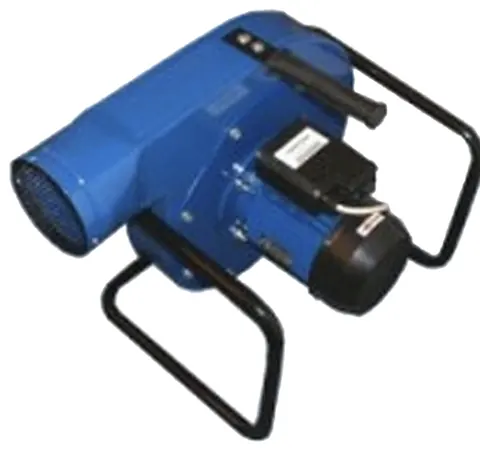 Duct sealing and extractionDuct balloons, diffuser caps and extraction
Frequently asked questions: hotel air duct cleaning
How do you clean the air ducts of a hotel without disturbing guests?
Work per vertical shaft, because rooms stacked above each other usually share one extract duct. Choose a quiet week, take that column of rooms off sale for a day, seal the valves in other rooms and have housekeeping check afterwards. That way you work on each shaft only once and other guests notice nothing.
Which machine suits the bathroom extraction of hotel rooms?
For short, narrow ducts from valve to shaft the PD4 is handy: you drive it with a cordless drill and the shaft is 2.5 to 7.5 metres long. With the Intelligent Airnozzle you clean from 30 mm and see the result straight away on camera. For the shaft itself the DC4 is more suitable.
How clean do the air ducts in a hotel need to be?
According to a trade article on EN 15780, hotels fall into the medium risk group, with a dust layer below 3.0 g/m² and up to 4.5 g/m² in secondary ducts. Those figures come from a trade publication, not directly from the standard. EN 15780:2025 itself works with cleanliness classes and inspection intervals per class.
Is cleaning hotel ventilation a legal requirement in the Netherlands?
There is no fixed statutory frequency for cleaning hotel ducts. The Building Works Living Environment Decree does require a ventilation provision that prevents damage to health, and Article 6.2 of the Arbobesluit requires sufficient uncontaminated air for employees and an installation that is always ready for use.
Why does the bathroom of a hotel room smell musty?
A musty smell in a hotel bathroom often occurs because the extraction draws less air. A dirty shaft or fan increases the resistance, so moisture lingers. If the complaints come from rooms stacked above each other, look at the shared shaft and have it inspected with a camera.
How often should a hotel have its kitchen extraction cleaned?
The restaurant kitchen of a hotel follows the same advice as the wider hospitality sector. KHN (Royal Dutch Hospitality Association) recommends at least once a year, and more often with a grill, deep fryer or wok. Rabobank advises a restaurant with deep fryers to clean twice a year. Also check the conditions of your fire insurance.
Who in a hotel is responsible for the ventilation ducts?
You decide that yourself. A workable division: housekeeping keeps the valves and grilles in the rooms clean, the facilities team or installer handles filters and inspections, and the shafts and main ducts are cleaned by the facilities team or a contracted cleaning company. Put it in your maintenance plan.
When should the ventilation ducts of a hotel be cleaned?
The EPA names three signs: visible mould, vermin and excessive dust from the grilles. In a hotel a fourth is added: recurring guest complaints about smell or air quality in rooms connected to the same shaft. In that case, have a camera inspection done first before you clean.
How do you stop dust reaching other rooms during hotel duct cleaning?
Seal the valves in all rooms on the same shaft with foam caps and put the duct under negative pressure with an extraction unit. If that unit exhausts indoors, use a HEPA filter. That way the dust loosened by the brush goes into the extraction and not into the corridor or a guest room.
Does a hotel with air humidification face extra rules for its ducts?
Yes. Article 4.87b of the Arbobesluit sets out measures against legionella in air humidification installations. VDI 6022 specifies a hygiene inspection every 2 years for installations with humidification and every 3 years without. So include the ducts downstream of the humidifier in your inspection round.
Sources and reference date
All facts on this page were checked on 6 October 2026.
- MODBS, Keep it Clean (trade article on EN 15780)
- TÜV SÜD, VDI 6022 hygiene inspections (in German)
- IPLO, ventilation in existing buildings under the Bbl (in Dutch)
- Arbobesluit Article 6.2, air renewal (in Dutch)
- EPA, Should you have the air ducts in your home cleaned?
- Danduct, PD4 and PD5
- Danduct, accessories
- KHN, cleaning the extract duct of an extraction system (in Dutch)
Editorial team: Lamers Reinigingstechniek B.V., supplier of professional air duct cleaning equipment in Zelhem, the Netherlands. Updated on . See also Lamers Reinigingstechniek for cleaning contractors.
Request a quote or advice from Lamers

René Hendriksen, Sales Account Manager at Lamers, advises you on the machine, brushes and extraction for your jobs.
Briefly tell us what you clean (duct type, diameter, length, contamination and sector). Lamers will contact you with advice and a tailored quote.
Prefer direct contact? Call +31 (0)314 623 341, message us on WhatsApp 06-38048347 or email info@lamersequipment.nl.
Prefer a quick call first? Lamers will call you back

Leave your number. René Hendriksen or a colleague from Lamers will call you back to discuss duct type, diameter and the right equipment.
Or send us a message right away: WhatsApp 06-38048347